Aperçu
Choisir un fournisseur fiableFournisseur chinois de bridesIl s'agit moins de trouver le prix unitaire le plus bas que de confirmer que l'usine peut fournir des brides traçables et dimensionnellement correctes qui correspondent aux spécifications de votre projet. La Chine accueille un large éventail de producteurs, depuis les petits intermédiaires commerciaux jusqu'aux usines intégrées de forgeage et d'usinage, de sorte que les acheteurs qui définissent les exigences à l'avance et vérifient les capacités avant le paiement réduisent les retouches, les retards douaniers et les problèmes d'ajustement sur site.
Ce guide décrit une approche structurée pour les distributeurs, les entrepreneurs EPC et les équipes de maintenance qui s'approvisionnent en brides à souder, à enfiler, borgnes et à emboîtement en provenance de Chine pour les projets de tuyauterie pétrolière et gazière, d'électricité, d'eau et industrielle.
Pourquoi c'est important pour les composants de canalisations
Les brides sont des composants soumis à la pression. Une inadéquation au niveau de l'alésage, du revêtement, de la classe de pression ou de l'indice thermique du matériau peut bloquer l'installation, échouer à l'hydrotest ou créer un risque de fuite à long terme au niveau d'un joint boulonné. Lorsque vous vous approvisionnez auprès d'unFournisseur chinois de brides, la distance entre l'usine et le chantier rend la vérification avant expédition essentielle : vous ne pouvez pas facilement accéder à l'atelier une fois que les marchandises ont quitté le port.
Une sélection rigoureuse des fournisseurs affecte également les raccords de tuyauterie et les vannes associés dans la même nomenclature. Si l'alésage du moyeu de la bride ne correspond pas au programme de la paroi du tuyau, ou si la finition de la face surélevée diffère des spécifications du fournisseur de joint, l'ensemble du tiroir en souffre. Les acheteurs qui considèrent l'approvisionnement en brides comme une décision de qualité (et pas seulement une décision de coût) protègent les délais et l'exposition à la garantie sur l'ensemble de la tuyauterie.
Méthodes d'évaluation et critères de sélection
Utilisez le cadre suivant pour comparerFournisseur chinois de bridescandidats. Notez chaque domaine comme étant une réussite, une condition ou un échec avant d'émettre un bon de commande.
| Domaine d'évaluation | Que vérifier | Pourquoi c'est important |
|---|---|---|
| Portée de fabrication | Forgeage, traitement thermique, usinage, END en interne ou en sous-traitance | Contrôle la traçabilité et les délais |
| Connaissance des normes | ASME B16.5, B16.47, EN 1092, DIN, série GB/T 9112 | Empêche les mauvaises séries de brides sur les commandes d'exportation |
| Contrôle des matériaux | Examen MTR, contrôles ponctuels PMI, ségrégation scolaire | Évite une mauvaise qualité d'acier au niveau du joint de soudure |
| CQ dimensionnel | OD, alésage, cercle de boulons, finition de face, longueur de moyeu | Réduit les retouches sur le terrain |
| Expérience à l'exportation | Emballage, marquage, documents d'expédition, expéditions partielles | Réception en douane et sur site fluide |
| Communication | Réponse à l'appel d'offres en anglais, contrôle des révisions des dessins | Moins d'erreurs sur les dimensions personnalisées |
Présélection de fournisseurs étape par étape
1.Définissez d’abord la spécification.Énumérez le type de bride, la taille, la classe, le revêtement, le matériau, le revêtement et la norme applicable avant de contacter les fournisseurs. Les appels d’offres vagues attirent des devis vagues. 2.Demandez des preuves d'usine, pas des réclamations dans la brochure.Demandez des photos des lignes d'usinage, des enregistrements de traitement thermique et des échantillons MTC récents (expurgez les noms des clients si nécessaire). 3.Exécutez un échantillon ou une commande d’essai.Pour les nouvelles relations, un petit lot soumis à une inspection complète coûte souvent moins cher qu’un conteneur défectueux. 4.Vérifiez les projets de référence par application, et non par mur de logos.Un fournisseur spécialisé dans les brides à enfiler pour les réseaux d'aqueduc n'est peut-être pas la meilleure solution pour les cols à souder en alliage haute température. 5.Confirmez qui est responsable.Comprenez si vous achetez auprès du fabricant ou d'un commerçant et qui retravaille les produits non conformes.
Attentes en matière de normes et de documentation
Les projets d'exportation font généralement référence aux dimensions des brides ASME, EN ou DIN, même lorsque la production a lieu en Chine. Votre fournisseur doit démontrer sa capacité à fabriquer selon la norme de dessin que vous spécifiez, et pas simplement proposer une « bride GB similaire ». Demandez-leur comment ils mappent les normes nationales chinoises sur ASME B16.5 lorsque les acheteurs exigent une double déclaration de conformité.
Liste de contrôle des fournisseurs et des inspections
Avant d'approuver unFournisseur chinois de bridespour les commandes répétées, confirmez ce qui suit :
- Procédure qualité écrite couvrant le matériel entrant, les numéros de chauffe et l'inspection finale
- Outils de mesure calibrés pour le diamètre extérieur de la bride, le pas des trous de boulons et la planéité des faces
- Disponibilité du PMI ou du spectromètre pour les nuances d'acier inoxydable et d'alliage
- Capacité de test hydrostatique ou pneumatique lorsque requis par le bon de commande
- Procédure de marquage : numéro de coulée, calibre, classe, standard et traçabilité des lots
- Emballage d'exportation adapté au fret maritime : cerclage en acier, papier VCI, fumigation si nécessaire
- Politique claire sur les non-conformités dimensionnelles et les délais de remplacement
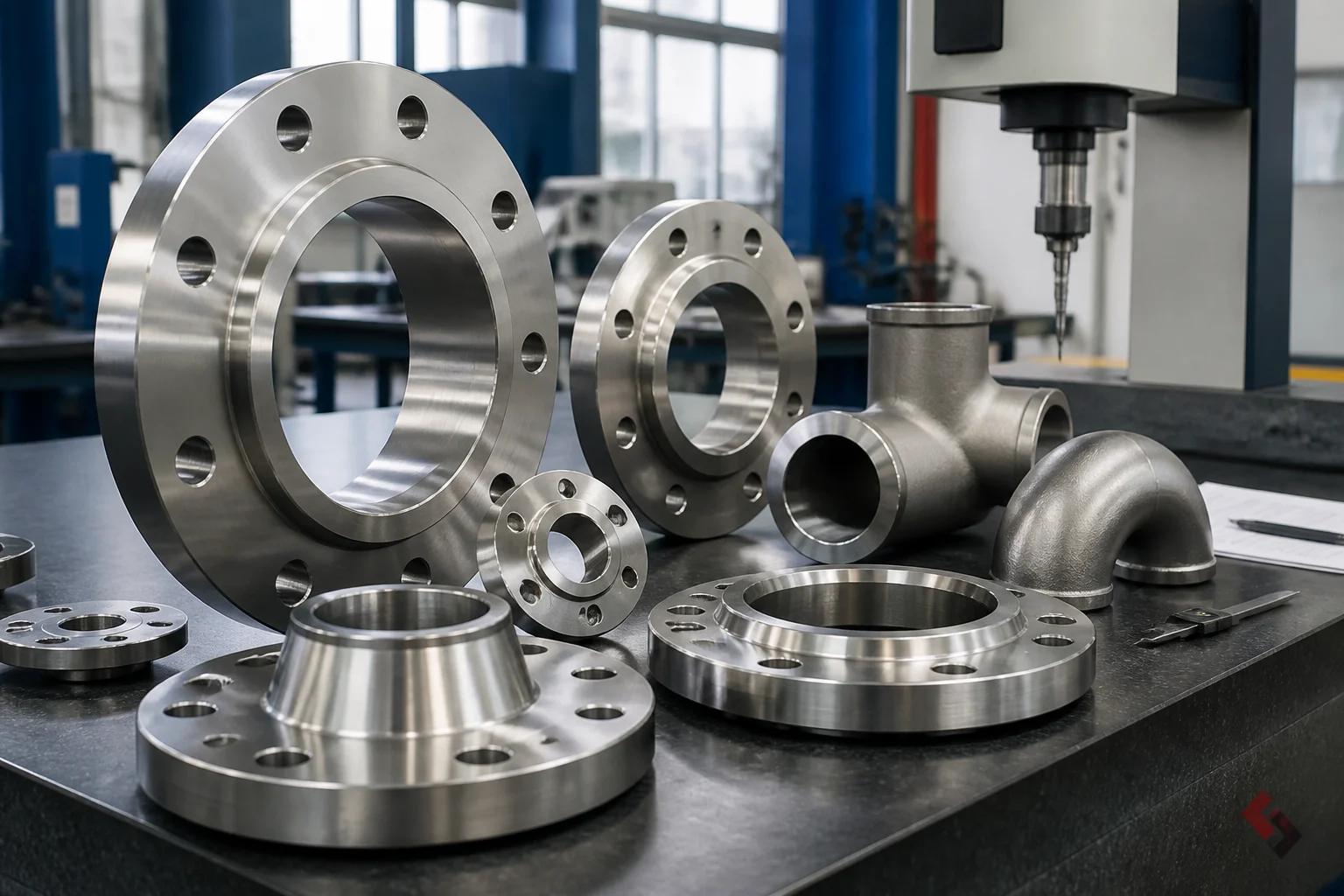
Hebei Noan Pipe Equipment, basée dans le comté de Mengcun, Cangzhou, Hebei, propose aux acheteurs à l'exportation des brides forgées et usinées ainsi que des raccords de tuyauterie et des raccords de vannes complémentaires, ce qui est utile lorsque vous souhaitez un seul contact pour plusieurs composants de tuyauterie sur le même projet.
FAQ
Quelle est la plus grosse erreur lors du choix d’un fournisseur de brides chinois ?
Les acheteurs sélectionnent souvent uniquement sur le prix unitaire sans vérifier la capacité d'usinage et la traçabilité MTR. Les décisions axées uniquement sur le prix conduisent souvent à des problèmes de finition, à des dimensions de moyeu incorrectes ou à des erreurs de qualité des matériaux qui n'apparaissent que lors de l'assemblage sur site.
Dois-je acheter dans une usine ou une société commerciale en Chine ?
Les deux modèles fonctionnent si la responsabilité est claire. Les usines peuvent offrir un meilleur contrôle technique ; les traders expérimentés peuvent consolider des nomenclatures mixtes. Dans les deux cas, insistez sur le nom de l’usine ou de l’atelier producteur et sur les dossiers d’inspection de votre commande.
Combien de fournisseurs dois-je qualifier pour un projet ?
Pour les services critiques, qualifiez au moins deux fournisseurs lors de l'appel d'offres, mais attribuez la production à une seule source principale par matériau et par type de bride afin de simplifier la traçabilité du numéro thermique. Conservez une sauvegarde approuvée pour les risques liés au calendrier.
Prochaines étapes
Si vous préparez une demande de prix pour des brides à col soudé, à enfiler, aveugles ou personnalisées en provenance de Chine, rassemblez votre tableau de classe de taille et de matériaux et envoyez-le avec la norme et le niveau d'inspection requis. Hebei Noan Pipe Equipment accueille les demandes techniques des distributeurs et des acheteurs EPC qui ont besoin d'être prêts à exporterBride chinoisefournir avec une documentation claire et un emballage adapté à l’expédition internationale. Contactez l'équipe pour discuter des spécifications, des échantillons et de la planification de la livraison avant la prochaine étape de votre projet.
Demander un devis