Overview
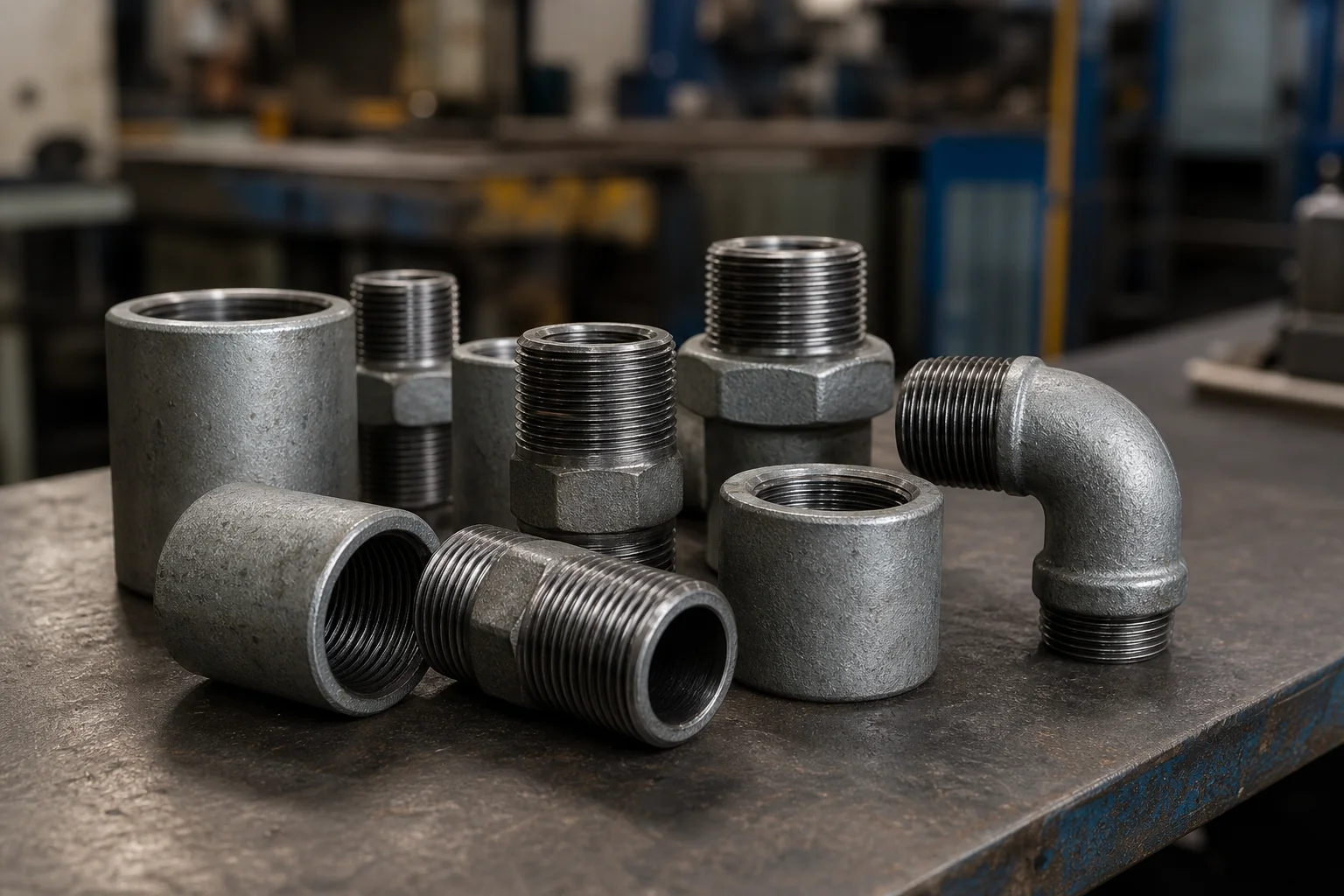
Flanged and threaded connections are both removable joining methods, but they work differently. A flanged joint uses two compatible flanges, a gasket, and bolting. A threaded joint uses mating internal and external threads and may rely on thread interference, a sealant, gasket, washer, or seat depending on the thread system.
The correct choice depends on size, pressure, temperature, fluid, leakage consequence, maintenance, vibration, corrosion, installation skill, piping code, and project specification.

Why It Matters for Pipe Components
Threaded joints are compact and can avoid field welding, but they introduce thread-root stress, sealing sensitivity, crevices, and size or service restrictions. Flanged joints are larger and heavier but provide controlled access for valves, equipment, inspection, and replacement.
Neither connection is leak-free by definition. Thread damage, mixed thread systems, poor sealant, flange misalignment, gasket damage, or uneven bolt loading can all cause leakage.
Lifecycle cost can reverse the initial-price comparison. A flange costs more to install but may simplify maintenance. A threaded joint can be economical but difficult to repair when corroded or seized.
Methods, Parameters, or Process
Compare the two connection types against the actual operating and maintenance requirements.
| Factor | Flanged connection | Threaded connection |
|---|---|---|
| Typical scale | Broad range, including larger lines | Common in smaller-bore systems |
| Seal | Gasket or engineered sealing element | Thread interference or separate seal |
| Maintenance | Can be disassembled with access and lifting | Can seize and may require rotating pipe or fittings |
| Inspection | Facing, alignment, gasket, bolting | Thread form, engagement, damage, sealant |
| Space/weight | Larger and heavier | Compact |
| Main error | Wrong class, facing, gasket, or bolt load | Wrong thread system, over-tightening, poor sealant |
Supplier and Inspection Checklist
- Confirm the piping code and project class permit the connection.
- Define pressure, temperature, fluid, and leakage consequence.
- For flanges, state standard, class, facing, gasket, and bolting.
- For threads, state exact thread designation and sealing method.
- Consider vibration, thermal cycling, corrosion, and mechanical loads.
- Check installation and future maintenance access.
- Use qualified personnel and controlled assembly procedures.
- Pressure- or leak-test the completed joint as required.
- Do not use a mixed BSP/NPT thread as an adapter.
Application to Pipe Fittings, Valves, and Flanges
Valves may be available with flanged, threaded, socket-weld, or butt-weld ends. The end connection should be selected together with valve body, class, trim, operation, and maintenance strategy.
Reducers, unions, adapters, and branch fittings can transition between systems, but every transition must be rated and compatible with the service.
FAQ
Which is stronger, flanged or threaded?
Strength cannot be compared without size, material, rating, design, and service. Each connection must meet its applicable requirements.
Which is easier to maintain?
Flanged joints often provide easier removal, but they require space, lifting, new gaskets, and controlled reassembly.
Can threaded connections be used for gas?
Only when the material, thread, sealant, pressure, installation, and local rules permit them.
Are flanged joints suitable for small pipe?
They can be, but weight, cost, space, and project standards may favour another connection.
Can a threaded valve be connected to a flange?
Yes through an approved rated adapter or companion fitting, not through improvised mixed connections.
Next Steps
List service conditions, size, material, maintenance needs, and project restrictions before selecting the connection. Define every flange or thread detail in the RFQ.
Request a Quote