Descripción general
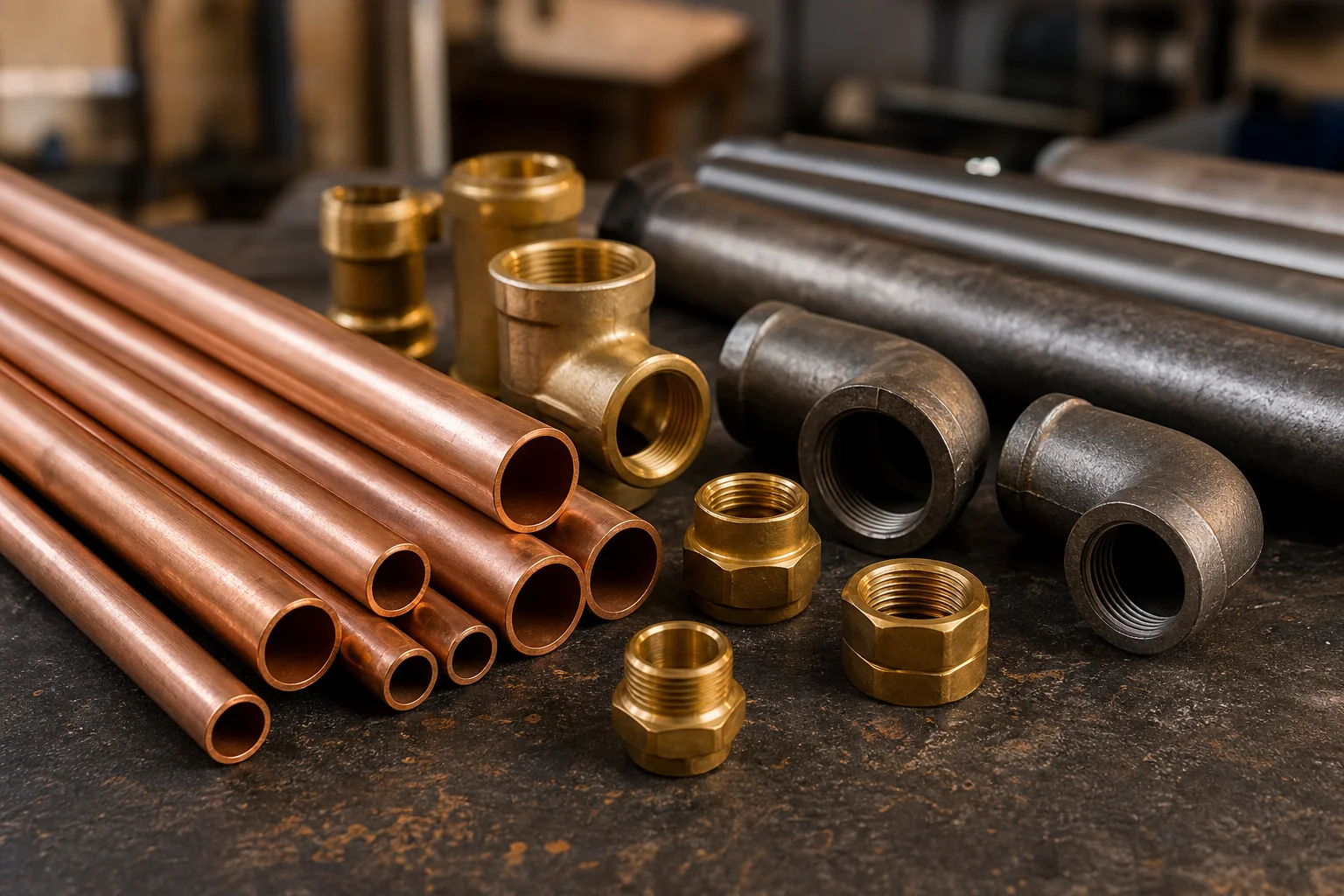
Las tuberías y accesorios metálicos de plomería incluyen acero al carbono, acero galvanizado, acero inoxidable, cobre, latón, bronce y otros sistemas metálicos utilizados para agua, aire, gas, calefacción, drenaje, protección contra incendios y servicios de construcción.
La selección del material debe considerar la química del agua, la corrosión, la temperatura, la presión, la higiene, el método de unión, el código local, el mantenimiento y la compatibilidad con las válvulas y equipos conectados.
Por qué es importante para los componentes de tuberías
Los diferentes metales se comportan de manera diferente en servicio. El acero galvanizado se basa en una protección de zinc. El acero inoxidable depende del grado y del estado de la superficie. El cobre es fácil de formar y unir, pero puede verse afectado por la química y la velocidad específicas del agua. El latón y el bronce son comunes para válvulas y adaptadores, pero se debe utilizar una composición adecuada.
Las conexiones de metales diferentes pueden crear corrosión galvánica cuando hay humedad y continuidad eléctrica. El diseño de soporte, aislamiento y unión puede ser tan importante como el propio accesorio.
Métodos, parámetros o proceso
Compare los materiales y conexiones candidatos.
| Material | Fortalezas típicas | Comprobaciones clave |
|---|---|---|
| Acero carbono | Resistencia, disponibilidad, soldabilidad. | Protección contra la corrosión, calidad del agua. |
| Acero galvanizado | Protección de zinc, sistemas roscados. | Calidad del recubrimiento, ajuste de la rosca, temperatura. |
| Acero inoxidable | Resistencia a la corrosión, limpieza. | Grado, exposición al cloruro, contaminación. |
| Cobre | Formabilidad, conductividad térmica. | Química del agua, erosión, método conjunto. |
| Latón o bronce | Válvulas, adaptadores, racores roscados. | Composición de la aleación, riesgo de descincificación. |
| Hierro dúctil o maleable | Sistemas mecánicos y roscados. | Recubrimiento, calificación, servicio aprobado. |
Los métodos de conexión incluyen soldadura, roscado, soldadura fuerte, prensado, compresión, acoplamientos ranurados y bridas. El proceso de unión debe ser compatible con el material y servicio.
Para aplicaciones potables o higiénicas, verifique las aprobaciones y limitaciones de materiales locales. Para servicio de gas, utilice componentes y selladores aprobados para el gas y el código.
Lista de verificación de inspección y proveedores
- Confirmar material y calificación aprobados.
- Defina las dimensiones y la pared de la tubería o tubo.
- Verifique el estándar de conexión y la clasificación de presión.
- Haga coincidir el método de unión con el material.
- Revisar la protección contra la corrosión y el recubrimiento.
- Verifique la compatibilidad de rosca, prensa, ranura o compresión.
- Considere el aislamiento de metales diferentes.
- Verificar los estándares de conexión de válvulas y accesorios.
- Inspeccionar la limpieza interna para el servicio de agua.
- Revisar certificados y aprobaciones locales cuando sea necesario.
- Protege las superficies mecanizadas y de sellado.
- Utilice envases que prevengan daños por humedad y contaminación cruzada.
Aplicación a accesorios de tuberías, válvulas y bridas
Los sistemas de servicios de edificios combinan tuberías, accesorios, válvulas, filtros, medidores, bombas y conexiones de equipos. Las transiciones de materiales son comunes en válvulas y boquillas de equipos. El diseño debe especificar adaptadores aprobados y aislamiento dieléctrico cuando sea necesario.
Se pueden usar bridas para equipos más grandes, mientras que las uniones, los accesorios a presión o las conexiones de compresión soportan juntas removibles más pequeñas. Todos los componentes deben tener clasificaciones de presión y temperatura compatibles.
Preguntas frecuentes
¿Qué metal es mejor para la plomería?
No existe una mejor opción universal. El material correcto depende del fluido, la química del agua, la temperatura, la presión, el riesgo de corrosión, el código y el presupuesto.
¿Se pueden conectar tuberías galvanizadas y de cobre?
Una conexión directa puede crear corrosión galvánica. Es posible que se requiera un método de aislamiento dieléctrico o de transición aprobado.
¿Los accesorios de acero inoxidable son aptos para agua potable?
Pueden serlo, pero se deben verificar el grado, la condición de la superficie, la química del agua y las aprobaciones locales.
¿Cuál es la diferencia entre accesorios de plomería y accesorios industriales?
Los accesorios de plomería a menudo se dirigen a los servicios de construcción y a los códigos locales, mientras que los accesorios industriales pueden utilizar estándares de tuberías de proceso, clases más altas, una trazabilidad más estricta y una inspección más exhaustiva.
Próximos pasos
Defina fluido, presión, temperatura, material de tubería, tamaño, método de unión, entorno de corrosión, aprobaciones y cantidad. Solicite al proveedor que confirme la total compatibilidad con válvulas, equipos y accesorios de transición.
Solicitar una cotización