Aperçu
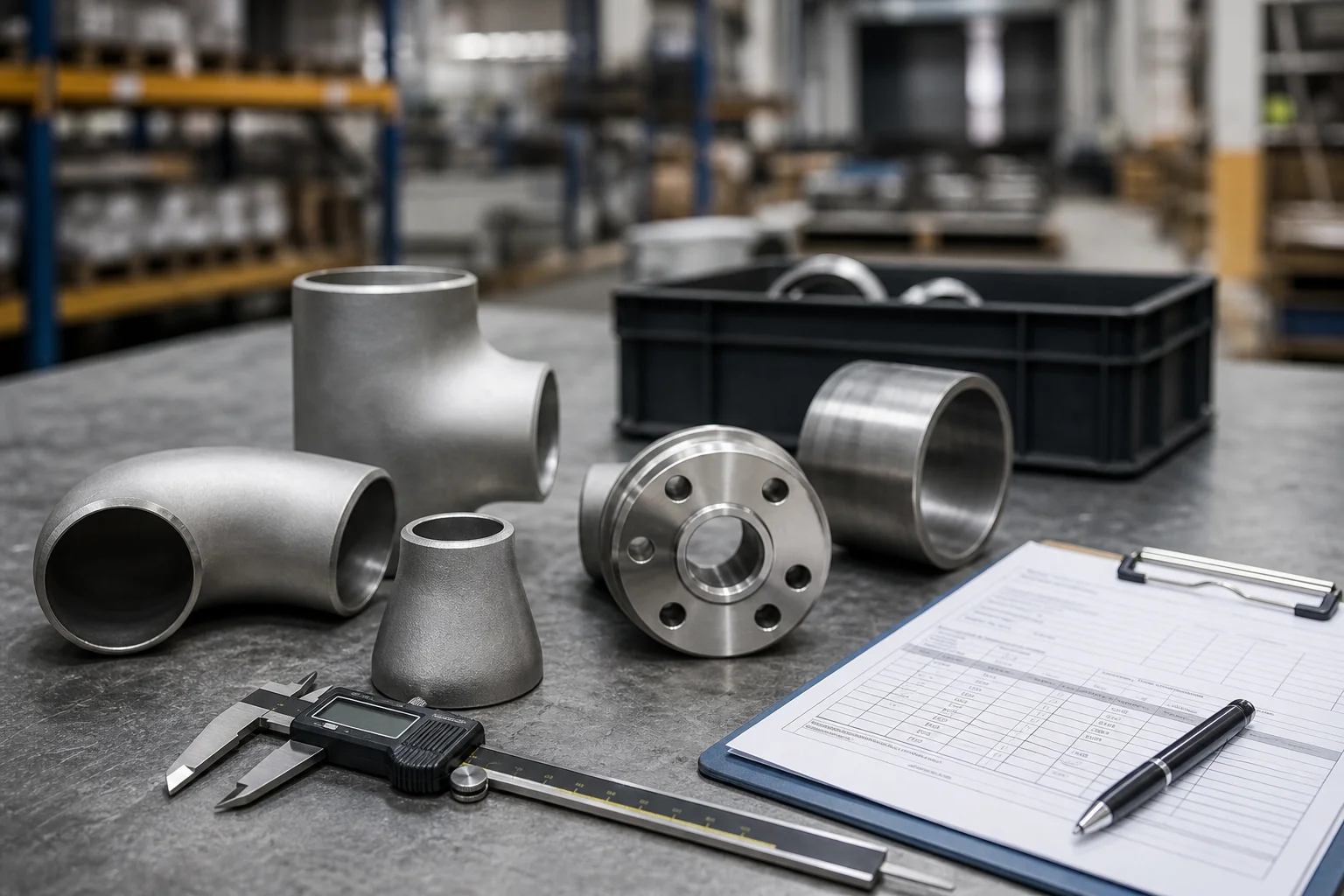
Un fournisseur de raccords de tuyauterie fiable doit faire plus que proposer un prix unitaire. Le fournisseur doit interpréter correctement les spécifications de la tuyauterie, contrôler les matières premières, vérifier les dimensions, maintenir la traçabilité des numéros de chaleur, fournir les certificats requis et expédier les produits pouvant être installés sans modification du site.
Le meilleur fournisseur n’est donc pas toujours celui dont l’offre initiale est la plus basse. Les acheteurs doivent comparer la conformité technique, la qualité de la documentation, le parcours de fabrication, la capacité d'inspection, l'emballage, les délais de livraison et le coût de résolution des non-conformités.
Pourquoi c'est important pour les composants de canalisations
Les raccords de tuyauterie sont souvent mélangés dans de nombreuses tailles, matériaux, programmes et normes au sein d'un même projet. Un seul bon de commande peut inclure des coudes en acier au carbone, des tés en acier inoxydable, des raccords forgés, des réducteurs, des dérivations, des brides et des vannes. Sans un contrôle strict des commandes, les étiquettes, les certificats, les numéros de coulée et les quantités peuvent être déconnectés.
La performance des fournisseurs affecte également la planification des projets. Les documents manquants peuvent retarder le dédouanement ou l'acceptation finale. Des biseaux incorrects peuvent arrêter le soudage. Les qualités de matériaux mixtes peuvent nécessiter une réinspection complète. Un mauvais emballage peut endommager les extrémités usinées, les faces des brides, les filetages et les revêtements protecteurs.
Méthodes, paramètres ou processus
Commencez par un examen de préqualification, suivi d’une évaluation technique des offres et d’une comparaison commerciale.
| Zone d'évaluation | Questions à poser | Preuve à demander |
|---|---|---|
| Portée du produit | Quels types de raccords, tailles, programmes et matériaux sont produits ou achetés ? | Gamme de produits, liste des équipements, commandes de référence |
| Contrôle des normes | Comment les normes ASME, MSS, EN, DIN, ISO et clients sont-elles gérées ? | Liste de normes contrôlées, procédure de révision des dessins |
| Contrôle des matériaux | Comment les chaleurs sont-elles identifiées et séparées ? | Certificats d'usine, procédure de traçabilité, enregistrements PMI |
| Fabrication | Quelles étapes sont réalisées en interne ? | Flux de processus, enregistrements du four, capacité d'usinage |
| Inspection | Quels tests peuvent être réalisés en interne ? | Liste d'étalonnage, rapports d'inspection, qualifications CND |
| Documentation | Le fournisseur peut-il délivrer des recueils de données complets ? | Exemple de MTC, plan d'inspection, liste de colisage, index MDR |
| Livraison | Comment les processus de production et de sous-traitance sont-ils suivis ? | Calendrier du projet, format d'expédition |
| Non-conformité | Comment sont gérés les écarts et les actions correctives ? | Exemples NCR et CAPA |
Lors de l’examen du devis, comparez chaque élément de campagne technique. Un prix n'est pas comparable si un fournisseur inclut la certification, les CND, le revêtement, l'emballage pour l'exportation et l'inspection par un tiers tandis qu'un autre les exclut.
La demande de prix doit clairement indiquer si la substitution est autorisée. Si des matériaux ou des normes équivalents peuvent être proposés, demandez au fournisseur d'identifier l'écart avant la passation de la commande plutôt qu'après la production.
Liste de contrôle des fournisseurs et des inspections
- Vérifiez le nom légal de l’entreprise, l’adresse de fabrication et l’expérience en exportation.
- Confirmez si l'entreprise est un fabricant, un revendeur, un commerçant ou un fournisseur intégré.
- Demandez une déclaration de conformité technique ligne par ligne.
- Vérifiez votre expérience avec les matériaux requis et les tailles de parois grandes ou fines.
- Examinez les exemples de certificats pour en vérifier l’exhaustivité et la traçabilité.
- Confirmez l'accès aux tests PMI, aux tests par ultrasons, à la radiographie, aux particules magnétiques, au ressuage, à la dureté et aux tests d'impact, le cas échéant.
- Vérifier la validité de l'étalonnage des équipements de mesure et de test.
- Demandez comment les matériaux mélangés et les spécifications appartenant au client sont contrôlés.
- Définissez l'emballage par matériau, chaleur, taille, numéro d'article et destination.
- Incluez les étapes d’approbation du document dans le bon de commande.
- Convenez des points d’arrêt d’inspection avant le début de la production.
- Évaluer la qualité des réponses lors de l'enquête ; des réponses techniques peu claires prédisent souvent des problèmes d’exécution.
Application aux raccords de tuyauterie, aux vannes et aux brides
Un fournisseur intégré peut simplifier les achats lorsque le projet nécessite des raccords de tuyauterie, des vannes, des brides, des joints et des boulons dans un seul ensemble. Cependant, l’intégration ne crée de la valeur que lorsque le fournisseur dispose d’un système de contrôle des articles solide. L'acheteur doit vérifier que les caractéristiques nominales des brides, les connexions des extrémités de vanne, les calendriers de montage, les matériaux des joints et les qualités des boulons sont recoupés par rapport à la classe de tuyauterie.
Pour les colis mixtes, demandez une nomenclature consolidée et un index des documents indiquant le certificat et l'état d'inspection de chaque article.
FAQ
Un fabricant est-il toujours meilleur qu’un fournisseur commercial ?
Pas nécessairement. Une société commerciale ou de fourniture de projets compétente peut coordonner plusieurs fabricants qualifiés et assurer un meilleur contrôle des emballages. La clé est l’identification transparente de la source, le contrôle technique, la traçabilité et la responsabilité de la qualité.
Quels documents un fournisseur de raccords de tuyauterie doit-il fournir ?
Les documents typiques comprennent des certificats de matériaux, des rapports dimensionnels, des rapports CND, des enregistrements de traitement thermique, des enregistrements de revêtement, des listes de colisage, des certificats de conformité et un enregistrement final de données de fabrication si nécessaire.
Comment les acheteurs peuvent-ils comparer équitablement les offres ?
Créez une fiche de comparaison technique et commerciale comprenant toutes les exclusions, normes, inspections, certifications, emballages, bases de transport, délais, validité et conditions de paiement.
Quel est le plus grand signe d’avertissement lors de l’évaluation des fournisseurs ?
Éviter à plusieurs reprises les questions techniques, refuser d'identifier la source de fabrication ou soumettre des certificats ne permettant pas de relier les produits cités sont des signes d'avertissement majeurs.
Prochaines étapes
Émettez une demande de prix structurée et exigez une fiche de conformité technique, un exemple de documentation, une déclaration de capacité d'inspection, un délai de production et une ventilation du devis. Présélectionnez les fournisseurs uniquement après avoir confirmé l’alignement commercial et technique.
Demander un devis