Overview: what is the difference?
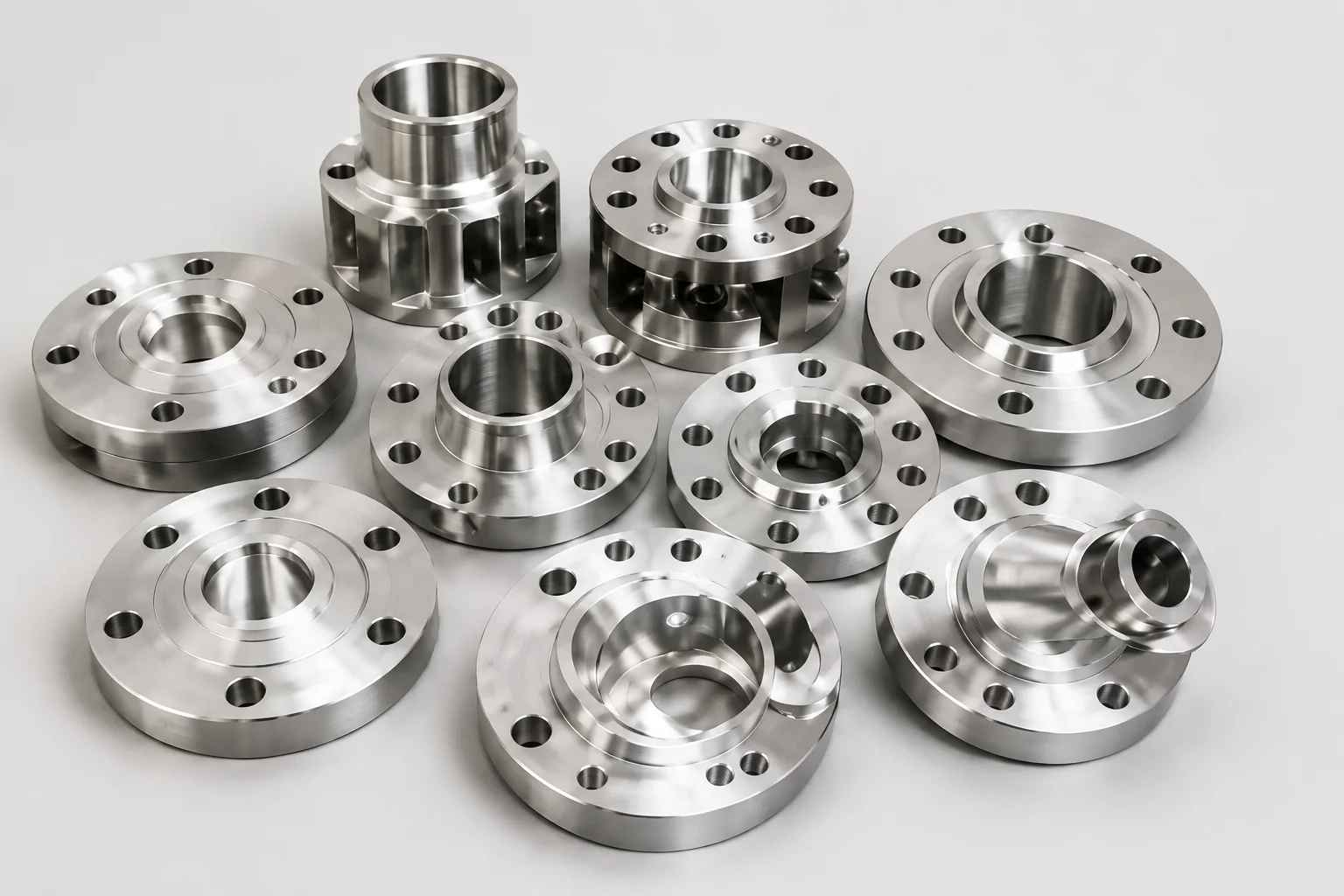
A raised face (RF) flange has a raised gasket seating area around the bore. A flat face (FF) flange has a flat gasket surface across the full face of the flange. The facing affects gasket selection, bolt load, sealing behavior, and compatibility with mating equipment.
Why does flange facing matter?
Flange facing is not a small detail. If the wrong facing is supplied, the flange may not match the mating flange, gasket, or equipment nozzle. This can delay installation or create sealing risk.
The RF vs FF decision should follow the project piping specification and the mating component design.
Raised face flange: what is it?
A raised face flange has a raised sealing surface. The gasket sits on the raised area, so bolt load is concentrated on a smaller gasket contact region.
RF flanges are widely used in industrial piping systems and are common in ASME flange systems.
Flat face flange: what is it?
A flat face flange has a flat sealing surface across the full flange face. Full-face gaskets may be used depending on project design.
Flat face flanges are often selected when connecting to equipment or piping components that require lower concentrated stress on the mating face.
RF vs FF comparison
| Item | Raised Face | Flat Face |
|---|---|---|
| Sealing surface | Raised ring around bore | Full flat face |
| Gasket contact | Usually ring gasket area | Full-face or project gasket |
| Common use | Process piping | Certain equipment connections |
| Compatibility | Must match mating flange requirements | Must match mating flange requirements |
| Buyer risk | Wrong facing can cause mismatch | Wrong facing can cause mismatch |
Can RF and FF flanges be connected together?
Do not assume RF and FF flanges can be mixed. In some cases, mixing facings may create uneven loading or equipment damage. The project engineer, piping specification, and equipment manufacturer should confirm compatibility.
What should buyers confirm?
- RF, FF, RTJ, or special facing
- standard and pressure class
- gasket type
- mating flange or equipment connection
- bolt and nut requirements
- surface finish if specified
- project drawing requirements
FAQ
Is RF better than FF?
Not universally. RF is common in process piping, while FF may be required for certain mating equipment or project requirements.
Can a supplier machine RF into FF?
It may be possible in some cases, but it must be confirmed technically and commercially before production.
Does EN 1092-1 use the same face naming as ASME?
EN and ASME systems may use different type and facing designations. Confirm drawings and project standards.
Internal links
- Pipe Flange Face Types
- Blind Flange
- Slip On Flange
- Welding Neck Flange
Conversion block for Hebei Nuoan
Add clear product filters for RF / FF / RTJ on flange pages. Include close-up photos of each facing to reduce buyer uncertainty and increase quote quality.