Descripción general
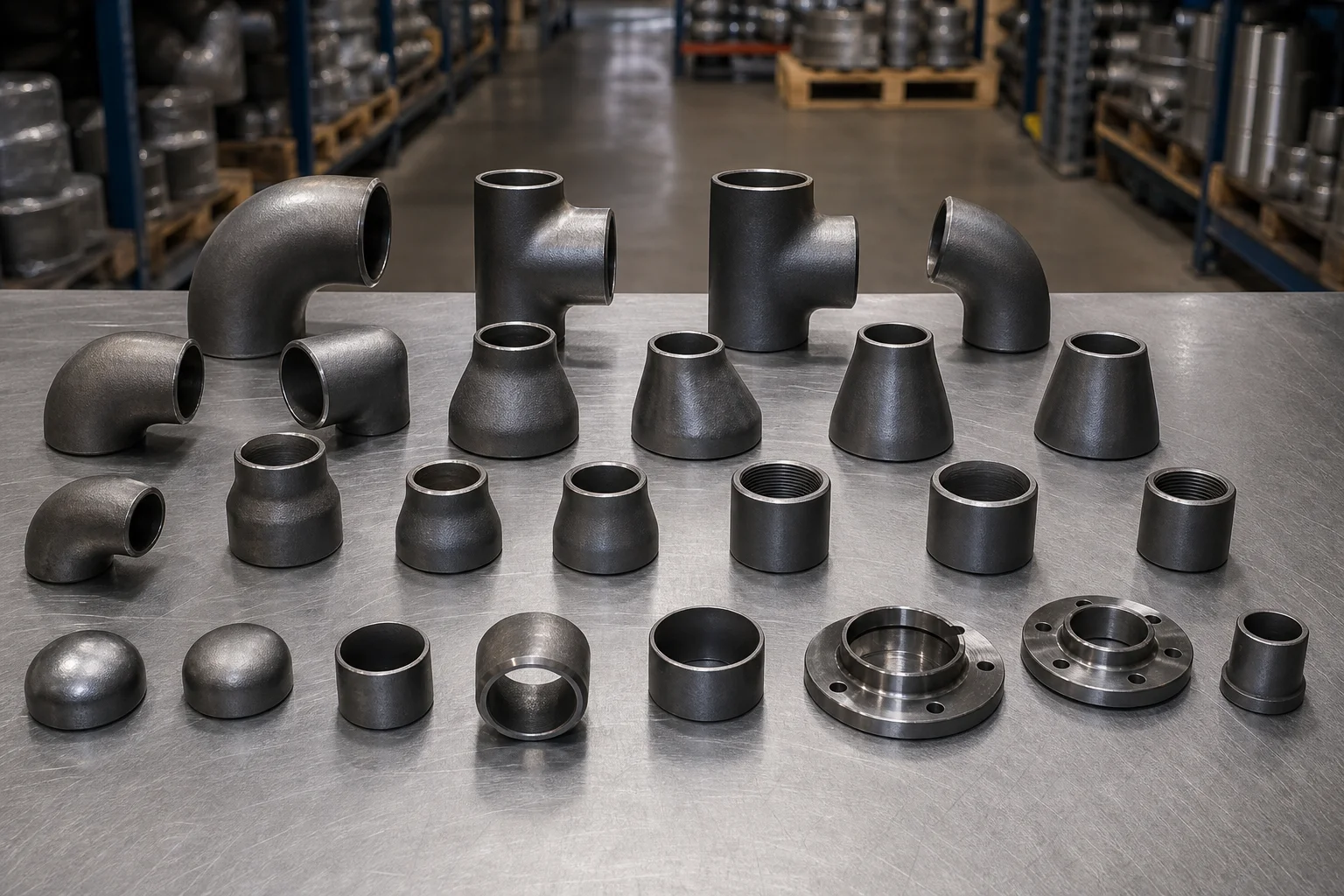
Los diferentes tipos de accesorios de tubería se definen por el trabajo que realizan en un sistema de tuberías. Los codos cambian de dirección, las T y las cruces crean ramas, los reductores cambian el tamaño de la línea, los acoplamientos y uniones conectan secciones, las tapas y tapones cierran aberturas y los accesorios de salida de las ramas refuerzan las conexiones pequeñas de una tubería más grande.
Los nombres de los accesorios de tubería por sí solos no son suficientes para comprarlos. Cada tipo puede estar disponible en varios materiales, dimensiones, clases de presión, espesores de pared y métodos de conexión. Una selección completa debe describir tanto la función como las especificaciones.
Por qué es importante para los componentes de tuberías
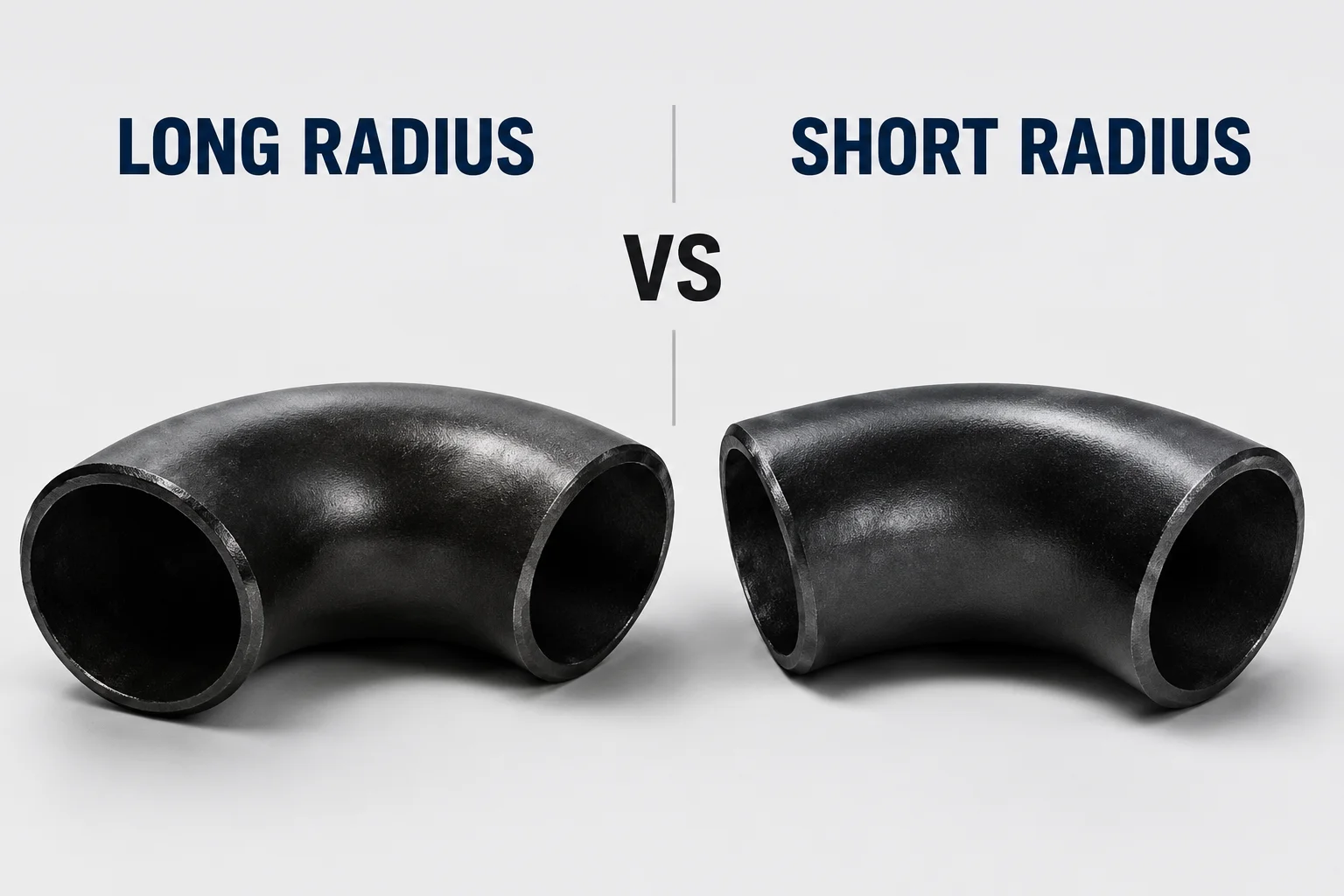
Una identificación correcta evita errores de diseño y retrasos en la instalación. Un reductor concéntrico y un reductor excéntrico tienen diferentes efectos sobre el flujo y el drenaje. Un codo de radio largo y un codo de radio corto ocupan espacios diferentes. Un acoplamiento y una unión pueden conectar la tubería, pero solo la unión está diseñada para facilitar el desmontaje. Una T para soldar a encaje y una T para soldar a tope utilizan una preparación de extremo de tubería diferente y generalmente sirven para diferentes rangos de tamaño.
Para diseñadores y compradores, la denominación estandarizada también mejora la comunicación entre ingeniería, adquisiciones, producción, inspección y el sitio de instalación.
Métodos, parámetros o proceso
Los accesorios de tubería se pueden clasificar por función.
| Tipo de ajuste | Función principal | Variantes comunes |
|---|---|---|
| Codo | Cambia de dirección | 45°, 90°, 180°, radio largo, radio corto |
| Tee | Crea una rama de 90°. | T igual, T reductor |
| Cruz | Crea dos ramas opuestas. | Cruz igual, cruz reductora. |
| reductor | Cambia el tamaño de la tubería | Concéntrico, excéntrico |
| Tapa | Cierra un extremo de tubería | Tapa para soldar a tope, tapa roscada |
| Enchufar | Cierra una abertura roscada. | Cabeza cuadrada, cabeza hexagonal, cabeza redonda |
| Enganche | Une dos secciones | Acoplamiento total, medio acoplamiento, acoplamiento reductor |
| Unión | Uniones con conexión removible | Roscado, para soldar |
| Pezón | Conexión de tubería corta | Cerrar, hex, estampar |
| Son | Conexión de rama reforzada | Weldolet, sockolet, threadolet |
| Accesorio con brida | Se conecta con pernos y junta. | Codo con brida, T, reductor |
También se pueden agrupar por método de conexión:
- Los accesorios para soldar a tope se sueldan directamente a los extremos de las tuberías correspondientes y son comunes en las tuberías de proceso.
- Los accesorios para soldar por encaje reciben la tubería en un encaje empotrado antes de soldar en ángulo.
- Los racores roscados utilizan roscas internas o externas y permiten el montaje sin soldadura a tope.
- Los accesorios de compresión se sellan comprimiendo casquillos, anillos o juntas alrededor del tubo o tubería.
- Los racores con bridas están atornillados y pueden desmontarse.
- Los accesorios ranurados y mecánicos utilizan extremos perfilados y acoplamientos mecánicos.
La selección debe comenzar con la clase de tubería, luego confirmar el material, el tamaño nominal, el espesor de la pared o la clase de presión, el estándar, la conexión final y los requisitos de inspección.
Lista de verificación de inspección y proveedores
- Utilice nombres de accesorios estandarizados en la RFQ y la orden de compra.
- Establezca una configuración igual o reductora para tees y cruces.
- Defina el ángulo y el radio del codo.
- Defina el tipo de reductor y la orientación de instalación cuando sea relevante.
- Confirme el método de conexión y la forma del hilo.
- Haga coincidir el programa de montaje o el orificio con la tubería conectada.
- Verifique las dimensiones de centro a extremo y de extremo a extremo.
- Verifique la trazabilidad del grado del material y del número de calor.
- Confirme si el producto no tiene costuras, está soldado, forjado, fundido o fabricado.
- Solicite dibujos para dimensiones no estándar o geometría de rama especial.
- Inspeccione las marcas, la preparación de los extremos, el estado de la superficie y el embalaje protector.
Aplicación a accesorios de tuberías, válvulas y bridas
La selección de accesorios afecta la disposición de válvulas y bridas. Los codos influyen en el acceso a la válvula y en la holgura del actuador. Los reductores cerca de bombas y válvulas de control afectan el perfil de flujo. Se pueden agregar uniones o bridas donde el equipo necesita mantenimiento. Los accesorios derivados se utilizan con frecuencia para drenajes, respiraderos, instrumentos y líneas de derivación.
Un diseño de tubería coordinado considera la función de cada accesorio junto con la orientación de la válvula, las dimensiones cara a cara de las bridas, el acceso a las juntas, el espacio para soldadura y el mantenimiento futuro.
Preguntas frecuentes
¿Qué es un accesorio de tubería?
Un accesorio de tubería es un componente que se utiliza para conectar tuberías, cambiar de dirección, crear una rama, cambiar el tamaño, terminar una línea o conectar tuberías a equipos.
¿Cuáles son los nombres de accesorios de tubería más comunes?
Los nombres comunes incluyen codo, T, reductor, acoplamiento, unión, tapa, tapón, cruz, niple y accesorio de salida de derivación.
¿Cuál es la diferencia entre un codo y una curva?
Normalmente, un codo se fabrica con dimensiones de ajuste estandarizadas. Un codo de tubería se forma a partir de una tubería y puede utilizar un radio de curvatura mayor o específico del proyecto.
¿Qué accesorio se utiliza para reducir el tamaño de la tubería?
Se utiliza un reductor en tuberías soldadas a tope, mientras que se pueden utilizar acoplamientos reductores, casquillos reductores o adaptadores reductores en sistemas roscados, de casquillo, de compresión o mecánicos.
¿Qué accesorio es más fácil de quitar?
Las bridas y uniones se utilizan comúnmente cuando se requiere desmantelamiento. La mejor opción depende del tamaño, la presión, el servicio y la frecuencia de mantenimiento.
Próximos pasos
Cree un programa de instalación que enumere el número de artículo, el tipo de instalación, el tamaño, el material, el estándar, la conexión, la pared o clase, la cantidad y los requisitos de inspección. Utilice dibujos para cualquier configuración que no pueda describirse sin ambigüedades con terminología estándar.
Solicitar una cotización