Überblick
Unter schwarzem Rohr versteht man in der Regel ein unverzinktes Kohlenstoffstahlrohr mit einer dunklen Oberfläche oder Schutzoberfläche. Bei verzinkten Rohren handelt es sich um mit Zink beschichtete Stahlrohre, um die atmosphärische und wasserseitige Korrosionsbeständigkeit innerhalb der Grenzen der Beschichtung zu verbessern. Diese Namen beschreiben den Oberflächenzustand und nicht eine garantierte Materialqualität, Wandanordnung, Druckstufe oder Produktnorm.
Ein Käufer sollte den Basisrohrstandard, die Qualität, die Größe, die Wand, den Herstellungsweg, den Endtyp, die Anforderungen an die Zinkbeschichtung, den Gewindestandard, den Service und die Inspektion angeben. Farbe allein ist keine akzeptable Methode zur Materialidentifizierung.
Warum es für Rohrkomponenten wichtig ist
Beim Verzinken wird eine Opferzinkschicht hinzugefügt, die Beschichtung kann jedoch durch Schneiden, Gewindeschneiden, Schweißen, Biegen, Stöße oder aggressive Chemikalien beschädigt werden. Internes Zink kann auch die Chemie, Sauberkeit und Kompatibilität des Wassers mit einigen Prozessflüssigkeiten beeinträchtigen.
Beim Schweißen von verzinktem Stahl entstehen Zinkoxiddämpfe und können zu Porosität oder mangelnder Verschmelzung führen, wenn die Beschichtung nicht gemäß einem zugelassenen Sicherheits- und Schweißverfahren gehandhabt wird. Die Entfernung und Reparatur von Beschichtungen muss den Projekt- und behördlichen Anforderungen entsprechen. Bei schwarzem Stahl besteht dieses zinkbedingte Problem nicht, er kann jedoch schnell korrodieren, wenn er ohne ein geeignetes Schutzsystem freigelegt wird.
Für Gas-, Brandschutz-, Trinkwasser-, Druckluft- und Prozesssysteme können örtliche Vorschriften und Eigentümerstandards unterschiedliche Materialien und Beschichtungen zulassen oder einschränken. Die Entscheidung sollte nicht auf einer allgemeinen Internetregel basieren.
Methoden, Parameter oder Prozess
Vergleichen Sie die gesamten Produkt- und Serviceanforderungen und nicht nur die Oberflächenfarbe.
| Besonderheit | Schwarzes Stahlrohr | Verzinktes Stahlrohr |
|---|---|---|
| Oberfläche | Unverzinktes Werk oder spezifizierte Beschichtung | Nach einem zugelassenen Verfahren verzinkt |
| Korrosionsschutz | Erfordert eine umgebungsspezifische Beschichtung oder Kontrolle | Zink bietet in begrenztem Umfang Opferschutz |
| Schweißen | Standardmäßige Schweißsteuerungen für Kohlenstoffstahl | Zusätzliche Zinkrauch-, Beschichtungsentfernungs- und Reparaturkontrollen |
| Einfädeln | Gewinde legen blanken Stahl frei, sofern er nicht geschützt ist | Gewinde durchschneiden die Beschichtung und benötigen einen zugelassenen Schutz |
| Inspektion | Grundrohr, Abmessungen, Oberfläche, ggf. Beschichtung | Basisrohr plus Zinkmasse/-dicke, Haftung, Kontinuität, Beschädigung |
| Serviceauswahl | Basierend auf Code, Flüssigkeit, Umgebung, Temperatur | Hängt auch von der Zinkverträglichkeit und der Haltbarkeit der Beschichtung ab |
Checkliste für Lieferanten und Inspektionen
- Identifizieren Sie die Basisstahlspezifikation und -sorte.
- Geben Sie Größe, Wand, Herstellungsweg, Länge und Enden an.
- Definieren Sie den Verzinkungsstandard, den Beschichtungsort und die Akzeptanz, wenn eine Zinkbeschichtung erforderlich ist.
- Untersuchen Sie Gewinde, abgeschnittene Enden, Schweißzonen und Handhabungsschäden.
- Bestätigen Sie die Beschichtungsreparaturprodukte und die Oberflächenvorbereitung.
- Überprüfen Sie gegebenenfalls die Flüssigkeitskompatibilität und die Trinkwasser- oder Hygienezulassungen.
- Beim Schweißen oder Erhitzen von verzinktem Stahl sind geeignete Belüftungs- und Arbeitsplatzkontrollen zu verwenden.
- Überprüfen Sie die örtlichen Gas- und Brandschutzvorschriften, bevor Sie sich für schwarze oder verzinkte Rohre entscheiden.
- Verwenden Sie das schwarze Erscheinungsbild nicht als Beweis für eine bestimmte Stahlsorte.
- Geben Sie eine Verpackung an, die Flecken bei nasser Lagerung und mechanische Beschädigungen verhindert.
Anwendung auf Rohrverbindungen, Ventile und Flansche
Schwarze Stahlrohre sind in industriellen Versorgungs-, Prozess-, Feuer- und ausgewählten Gassystemen weit verbreitet, wenn sie entsprechend zugelassen und geschützt sind. Verzinkte Rohre werden häufig im Wasser-, Außen-, Bau- und Versorgungsbereich eingesetzt, wo ein Zinkschutz geeignet ist.
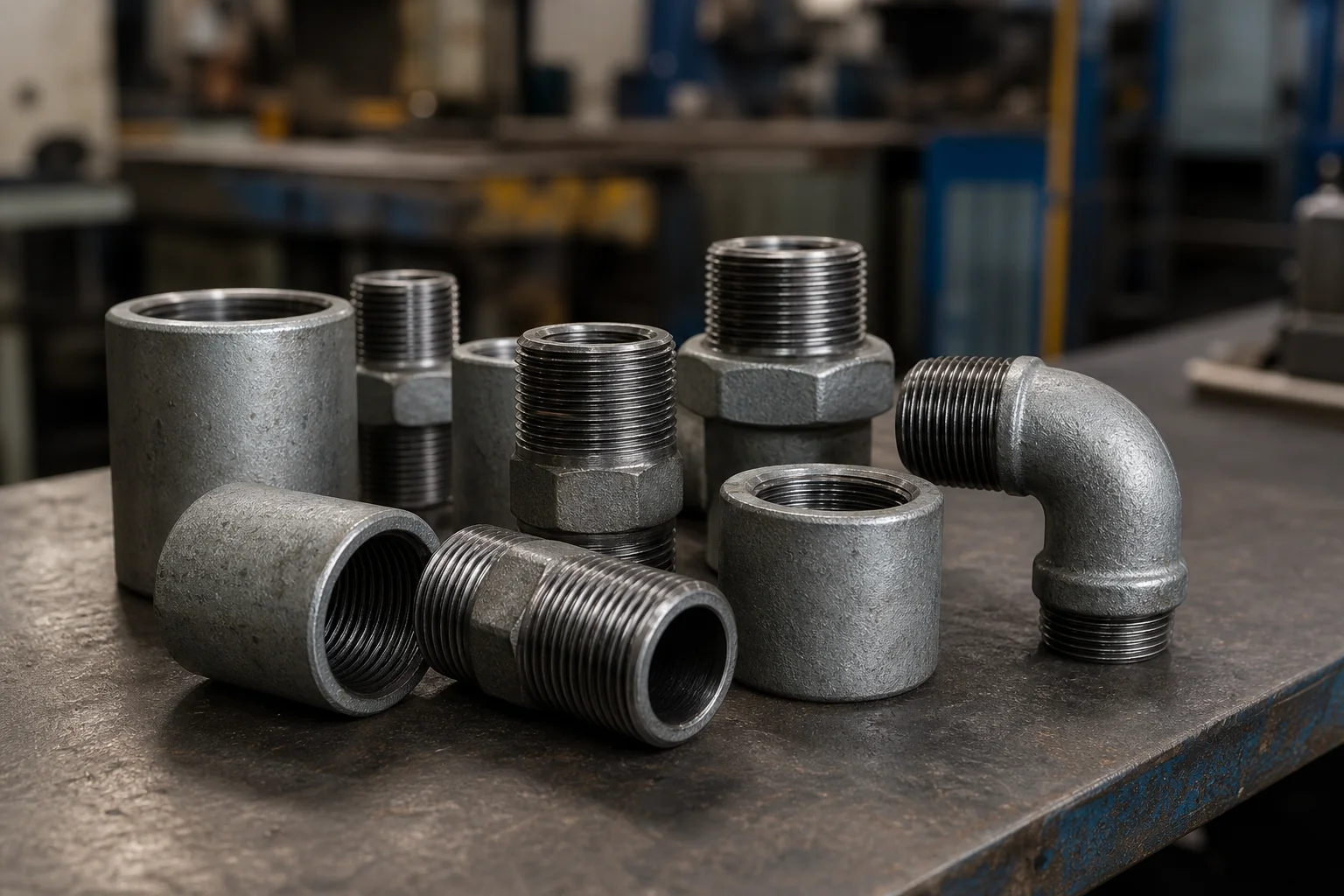
Gewindeanschlüsse können schwarz oder verzinkt sein, das Anschlussmaterial und die Produktnorm müssen jedoch dennoch zum System passen. Durch das Mischen von verzinkten Rohren mit unbeschichteten Bauteilen entstehen lokale Beschichtungsübergänge, die einer Korrosionsprüfung bedürfen. Ventile können über Beschichtungen oder Materialien verfügen, die kompatible Galvanik- und Dichtungspraktiken erfordern.
FAQ
Ist schwarzes Rohr eine andere Stahlsorte als verzinktes Rohr?
Nicht unbedingt. Die Begriffe beschreiben hauptsächlich den Oberflächenzustand. Die Spezifikation und Qualität des Grundmaterials muss gesondert angegeben werden.
Rostet ein verzinktes Rohr nie?
Nein. Zink wird mit der Zeit verbraucht und kann beschädigt oder chemisch angegriffen werden. Abgeschnittene Enden und Gewindebereiche erfordern Aufmerksamkeit.
Können verzinkte Rohre geschweißt werden?
Es kann nur nach einem zugelassenen Verfahren mit Kontrollen für Zinkentfernung, Rauch, Schweißqualität und Beschichtungsreparatur geschweißt werden.
Was ist besser für Gasleitungen?
Das zulässige Material hängt von den örtlichen Vorschriften, der Gasart, dem Druck, der Installation, den Armaturen und den behördlichen Anforderungen ab.
Können schwarze und verzinkte Beschläge gemischt werden?
Die Verbindung ist möglicherweise physikalisch möglich, aber Korrosion, Beschichtungskontinuität, Servicegenehmigung und Projektregeln müssen überprüft werden.
Nächste Schritte
Geben Sie die Grundrohrnorm und die Beschichtungsanforderungen separat an. Fragen Sie den Lieferanten nach Material- und Beschichtungszertifikaten, Gewinde- oder Schweißdetails, Beschichtungsreparaturmethoden und Servicegenehmigungen.
Fordern Sie ein Angebot an