Overview
Black pipe usually means ungalvanized carbon-steel pipe with a dark mill or protective surface. Galvanized pipe is steel pipe coated with zinc to improve atmospheric and water-side corrosion resistance within the coating’s limits. These names describe surface condition, not one guaranteed material grade, wall schedule, pressure rating, or product standard.
A buyer should specify the base pipe standard, grade, size, wall, manufacturing route, end type, zinc-coating requirement, thread standard, service, and inspection. Color alone is not an acceptable material identification method.

Why It Matters for Pipe Components
Galvanizing adds a sacrificial zinc layer, but the coating can be damaged by cutting, threading, welding, bending, impact, or aggressive chemicals. Internal zinc can also affect water chemistry, cleanliness, and compatibility with some process fluids.
Welding galvanized steel creates zinc oxide fumes and can cause porosity or lack of fusion if the coating is not handled under an approved safety and welding procedure. Coating removal and repair must follow project and regulatory requirements. Black steel does not have this zinc-related issue, but it can corrode quickly when exposed without a suitable protection system.
For gas, fire-protection, potable-water, compressed-air, and process systems, local codes and owner standards may permit or restrict different materials and coatings. The decision should not be based on a generic internet rule.
Methods, Parameters, or Process
Compare the complete product and service requirements rather than only the surface color.
| Feature | Black steel pipe | Galvanized steel pipe |
|---|---|---|
| Surface | Ungalvanized mill or specified coating | Zinc-coated by an approved process |
| Corrosion protection | Requires environment-specific coating or control | Zinc provides sacrificial protection within limits |
| Welding | Standard carbon-steel welding controls | Additional zinc fume, coating removal, and repair controls |
| Threading | Threads expose bare steel unless protected | Threads cut through coating and need approved protection |
| Inspection | Base pipe, dimensions, surface, coating if any | Base pipe plus zinc mass/thickness, adhesion, continuity, damage |
| Service selection | Based on code, fluid, environment, temperature | Also depends on zinc compatibility and coating durability |
Supplier and Inspection Checklist
- Identify the base steel specification and grade.
- State size, wall, manufacturing route, length, and ends.
- Define galvanizing standard, coating location, and acceptance when zinc coating is required.
- Inspect threads, cut ends, weld zones, and handling damage.
- Confirm coating-repair products and surface preparation.
- Review fluid compatibility and potable-water or hygiene approvals where relevant.
- Use proper ventilation and occupational controls for any welding or heating of zinc-coated steel.
- Check local gas and fire-system rules before selecting black or galvanized pipe.
- Do not use black appearance as evidence of a particular steel grade.
- Specify packaging that prevents wet storage stain and mechanical damage.
Application to Pipe Fittings, Valves, and Flanges
Black steel pipe is common in industrial utility, process, fire, and selected gas systems when permitted and protected appropriately. Galvanized pipe is common in water, outdoor, structural, and utility services where zinc protection is suitable.
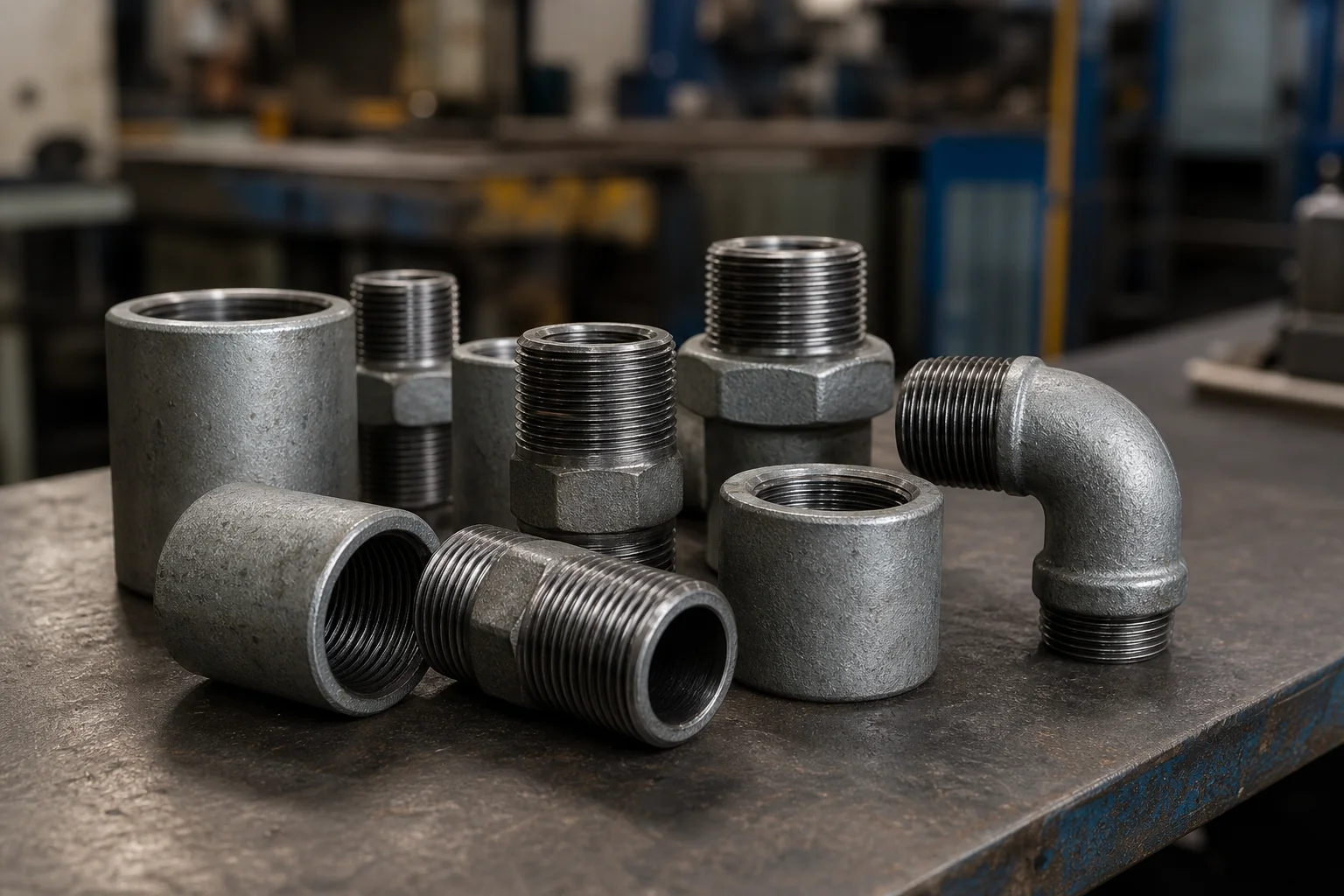
Threaded fittings may be black or galvanized, but the fitting material and product standard must still match the system. Mixing galvanized pipe with uncoated components creates local coating transitions that need corrosion review. Valves may have coatings or materials that require compatible galvanic and sealing practices.
FAQ
Is black pipe a different steel grade from galvanized pipe?
Not necessarily. The terms mainly describe surface condition. The base material specification and grade must be stated separately.
Does galvanized pipe never rust?
No. Zinc is consumed over time and can be damaged or chemically attacked. Cut ends and threaded areas need attention.
Can galvanized pipe be welded?
It can be welded only under an approved procedure with controls for zinc removal, fumes, weld quality, and coating repair.
Which is better for gas lines?
The permitted material depends on local code, gas type, pressure, installation, fittings, and authority requirements.
Can black and galvanized fittings be mixed?
The joint may be physically possible, but corrosion, coating continuity, service approval, and project rules must be reviewed.
Next Steps
State the base pipe standard and coating requirement separately. Ask the supplier for material and coating certificates, thread or weld details, coating repair method, and service approvals.
Request a Quote