产品选型

Galvanised Pipe and Fittings: Selection and Inspection

A technical guide to galvanized pipe fittings, coating considerations, threaded connections, inspection, service limitations, and purchasing.

阅读 41
Galvanised Pipe and Fittings: Selection and Inspection

Overview

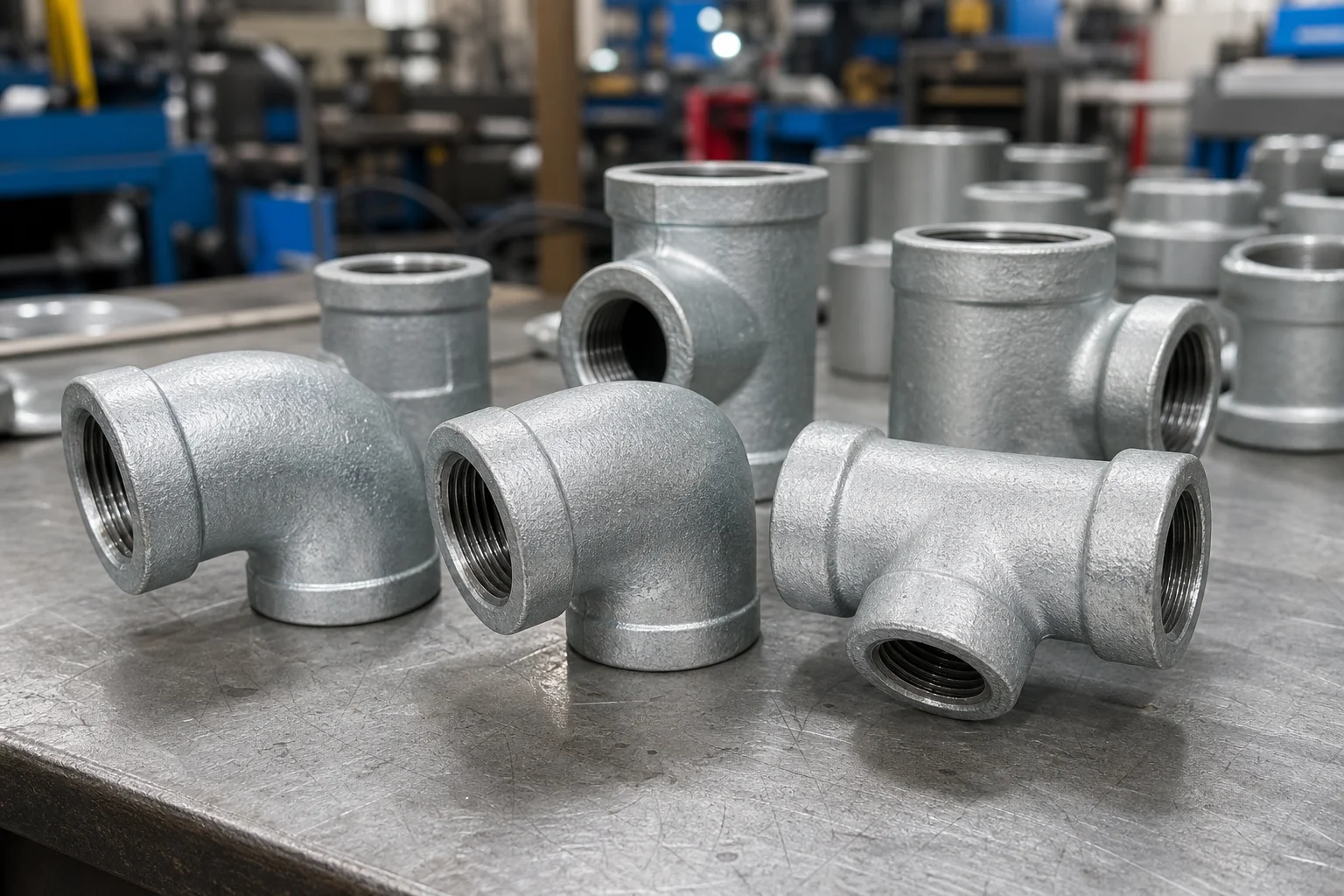
Galvanised pipe and fittings are steel components protected with a zinc coating to reduce atmospheric and water-related corrosion. Common products include threaded elbows, tees, couplings, unions, nipples, caps, plugs, flanges, and grooved fittings.

The coating does not replace correct base-material and pressure selection. Buyers must specify the steel grade, fitting standard, size, connection, pressure class, galvanizing method, coating quality, and intended service.

Why It Matters for Pipe Components

Zinc protection can extend service life in suitable environments, but poor coating control creates problems. Excess zinc on threads may prevent assembly. Bare areas, ash inclusions, sharp runs, or trapped acid can reduce quality. Cutting and welding after galvanizing can damage the coating and release fumes, so fabrication sequence matters.

Galvanized components may also be unsuitable for some chemicals, high temperatures, or services where zinc contamination is unacceptable. Compatibility with copper, stainless steel, and other metals should be reviewed to reduce galvanic corrosion risk.

Methods, Parameters, or Process

Selection should cover both the fitting and the coating.

ParameterWhat to define
Base materialMalleable iron, carbon steel, forged steel, cast steel, or project grade
Fitting typeElbow, tee, coupling, union, nipple, cap, plug, flange
ConnectionThreaded, grooved, flanged, welded before coating
Size and classNominal size, wall, pressure class, rating
CoatingHot-dip galvanized, electro-galvanized, zinc-plated, project requirement
ThreadNPT, BSPP, BSPT, or other standard
ServiceWater, air, fire protection, structure, utility, outdoor installation
InspectionVisual coating, thickness, adhesion, thread gauge, dimensional check

Hot-dip galvanizing generally provides a heavier coating than electro-galvanizing, but the project specification should define the required method and acceptance criteria.

For threaded fittings, galvanizing must be controlled so that threads remain within gauge. Threads may need approved post-galvanizing cleaning without removing excessive protection.

Supplier and Inspection Checklist

  • Confirm base material and fitting standard.
  • State galvanizing or zinc-coating method.
  • Define minimum coating requirement where applicable.
  • Inspect complete coverage and drainage.
  • Check for bare spots, lumps, sharp projections, trapped ash, and excessive runs.
  • Gauge threads after coating.
  • Verify mating assembly without forced engagement.
  • Protect threads with suitable caps or plugs.
  • Confirm coating does not obstruct grooves, sockets, gasket seats, or bolt holes.
  • Review repair method for minor coating damage.
  • Segregate wet galvanized products to prevent storage staining.
  • Use dry, ventilated packaging for export.

Application to Pipe Fittings, Valves, and Flanges

Galvanized fittings are commonly paired with galvanized pipe, valves, flanges, grooved couplings, and supports in water, fire-protection, structural, and utility systems. All mating components should have compatible dimensions and coatings.

Where a galvanized flange connects to a painted valve or dissimilar metal, review the gasket, bolting, electrical continuity, and environmental exposure. Avoid damaging coating during bolt tightening and installation.

FAQ

Is galvanized steel the same as stainless steel?

No. Galvanized steel is carbon or low-alloy steel protected by zinc. Stainless steel relies on its alloy composition and passive surface film for corrosion resistance.

Can galvanized fittings be welded?

Welding is possible only with appropriate procedures, fume controls, coating removal, and repair of the damaged area. Many systems prefer welding before galvanizing.

Why do galvanized threaded fittings sometimes bind?

Excess coating or poorly controlled thread cleaning can reduce clearance. Threads should be checked with calibrated gauges after coating.

Are galvanized fittings suitable for every water system?

No. Water chemistry, temperature, velocity, and downstream material requirements should be reviewed.

Next Steps

Specify the base material, size, rating, thread or connection standard, galvanizing method, coating acceptance, quantity, service, certification, and packing. Request coated thread samples when fit is critical.

Request a Quote

相关文章

Steel Pipe Fittings: Materials, Standards, and Inspection
产品选型

Steel Pipe Fittings: Materials, Standards, and Inspection

A practical reference for selecting and inspecting carbon, stainless, alloy, duplex, forged, welded, and fabricated steel fittings.

Threaded Pipe and Fittings: Types, Threads, and Selection
产品选型

Threaded Pipe and Fittings: Types, Threads, and Selection

A guide to threaded fitting types, thread standards, pressure classes, materials, sealing methods, inspection, and procurement.

Metal Plumbing Pipes and Fittings: Materials and Selection
产品选型

Metal Plumbing Pipes and Fittings: Materials and Selection

A selection guide to steel, stainless steel, copper, brass, and galvanized plumbing pipes and fittings.

河北诺安在线客服 - 管件阀门法兰报价咨询

在线客服

连接中

有问题随时咨询,我们会尽快回复您