제품 선택

Pipe-to-Pipe Connectors: Couplings, Unions and Joint Selection

A selection guide for joining two pipes with couplings, unions, flanges, threaded fittings, welded joints, mechanical couplings, and compression connectors while matching material, dimensions, service, and maintenance needs.

조회수 45회
Pipe-to-Pipe Connectors: Couplings, Unions and Joint Selection

Overview

A buyer searching for a pipe to pipe connector is usually trying to join two pipe or tube ends while maintaining alignment, sealing, pressure containment, and the required degree of permanence or removability. Common options include threaded couplings, unions, butt-weld joints, socket-weld fittings, flanges, mechanical couplings, grooved couplings, compression connectors, and proprietary transition fittings.

The correct connector depends on pipe material, actual dimensions, wall thickness, end preparation, pressure, temperature, fluid, external load, movement, corrosion, installation access, maintenance strategy, and the governing project documents. Two connectors with the same nominal size are not automatically interchangeable. The sealing principle, rating basis, material compatibility, and installation procedure must match the system.

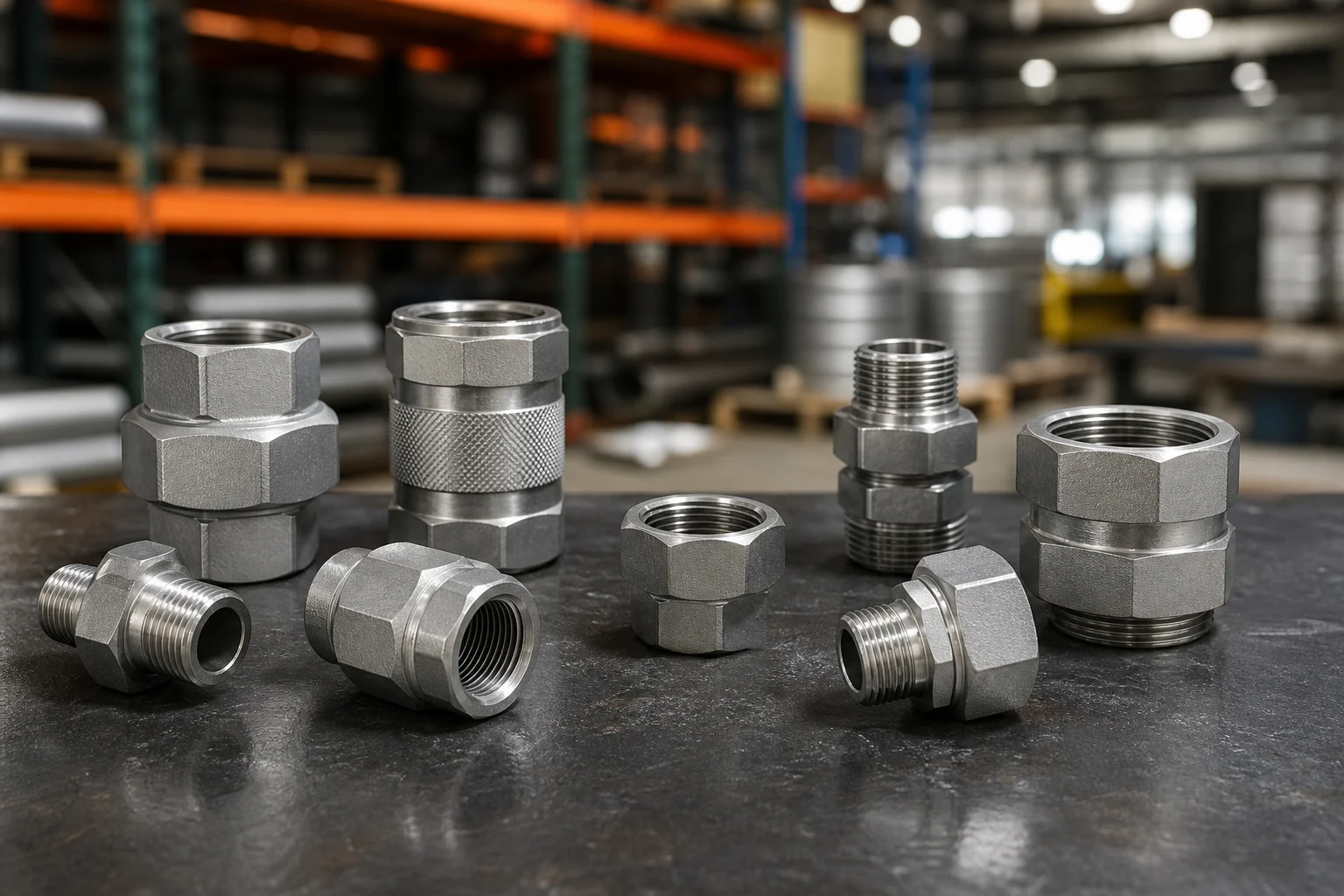
Pipe to pipe connectors and coupling joints

Why It Matters for Pipe Components

A connector is a system interface. It transfers pressure loads, axial force, bending, vibration, thermal movement, and installation loads between pipe sections. It may also create a leak path or a future maintenance point. Poor selection can lead to thread damage, weld mismatch, gasket extrusion, seal incompatibility, pullout, galvanic corrosion, or misalignment.

The phrase “half inch connector pipe” is particularly ambiguous. It may refer to half-inch NPS pipe, half-inch OD tubing, a threaded nipple, a compression adapter, a hose connection, or a structural clamp. The RFQ should identify both ends separately.

For mixed-material systems, transition design becomes more important. Steel-to-plastic, stainless-to-carbon steel, tube-to-pipe, and metric-to-inch connections may require purpose-designed adapters rather than generic couplings. The connector must also suit the restraint philosophy. Some joints are intended to resist axial pullout; others rely on separate anchors or thrust restraint. Flexible does not mean unrestrained, and restrained does not mean rigid in every direction. The piping stress analysis, manufacturer data, and installation drawing should define the expected movement and load transfer.

Methods, Parameters, or Process

What is a pipe-to-pipe connector?

A pipe connector is any component or joint arrangement whose main purpose is joining pipe sections. Some connectors are separate fittings, while others are created by preparing and welding the pipe ends directly. The term may also include adapters that change material, size, or connection type.

A complete connector description should state:

  • End 1 material, size, wall, and connection
  • End 2 material, size, wall, and connection
  • Connector body material
  • Seal or gasket material
  • Pressure-temperature rating basis
  • Applicable standard or manufacturer model
  • Required movement or restraint
  • Installation method and inspection

Which connector types join two pipes?

Connector typeTypical useMain checks
Full or reducing couplingStraight threaded, socket, or mechanical connectionEnd type, size, class, material, sealing method
UnionRemovable small-bore connectionSeat design, thread, material, orientation, replacement parts
Butt-weld jointPermanent welded connectionOD, wall, bevel, material, WPS, alignment, examination
Socket-weld couplingCompact forged connectionSocket, class, pipe end, weld details, service restrictions
Flanged jointRemovable connection for valves, equipment, and pipeClass/PN, facing, drilling, gasket, bolting, alignment
Mechanical couplingFast connection or repair in approved systemsPipe OD, end preparation, gasket, housing, restraint, manufacturer rating
Compression connectorTube or compatible pipe connectionActual OD, wall range, ferrule/seal, surface and installation procedure
Transition fittingJoins different materials, sizes, or connection systemsDifferential movement, corrosion, pullout, seal and design approval

How do couplings, unions, flanges, and welded joints differ?

A coupling is compact and usually joins two aligned ends. It may be threaded, socket-welded, grooved, compression, or mechanical. A union includes a separable joint that allows disconnection without rotating long pipe sections. It is useful where maintenance access is needed, but the seat and nut must be installed in the correct orientation.

A flanged joint is removable and suitable for valves, equipment, inspection points, and larger lines, subject to the selected standard and design. It requires coordinated flanges, gasket, bolting, facing, alignment, and tightening.

A welded joint is permanent and can provide a continuous pressure boundary. It requires compatible materials, fit-up, a qualified welding procedure, qualified personnel, and the specified examination. Welding is not automatically superior where frequent removal, heat-sensitive materials, or restricted site work apply.

How should a connector be matched to pipe material and dimensions?

Identify pipe material and product standard on both sides. Record nominal size, actual OD, wall thickness, and end preparation. For tubing connectors, actual OD and wall range are often critical. For pipe connectors, NPS or DN, schedule or wall, and the selected connection standard may control.

Material compatibility includes more than strength. Check corrosion, galvanic potential, thermal expansion, temperature limits, permeation, chemical resistance, hardness, and weldability. A stainless connector on carbon steel may require electrical isolation or a controlled transition. A metal connector on PE pipe must accommodate the polymer’s dimensional system, creep behavior, and joining method.

Do not force a connector onto pipe that is out of round, corroded, scored, coated beyond the approved range, or dimensionally outside the manufacturer’s limits.

Which service conditions affect connector selection?

  • Design and operating pressure
  • Design and operating temperature
  • Fluid composition and phase
  • Corrosion and erosion
  • Vacuum or external pressure
  • Vibration and cyclic loading
  • Thermal expansion and contraction
  • Axial restraint or controlled movement
  • Fire exposure and external environment
  • Buried, submerged, marine, hygienic, clean, or hazardous service
  • Maintenance frequency and access
  • Local code and authority requirements

A flexible mechanical connector may accommodate limited movement, but it should not be treated as an expansion joint unless the manufacturer and design explicitly allow that function. A union improves disassembly but may introduce a seal and orientation requirement. A threaded joint may be convenient but can be unsuitable for certain cyclic or hazardous services under the governing code.

What installation and inspection points should be checked?

For threaded connectors, verify thread form, cleanliness, engagement, sealant, alignment, and torque or assembly practice. For welded connectors, inspect material, bevel, root opening, alignment, interpass controls, completed weld, and required NDT. For flanges, check facing condition, parallelism, bolt-hole alignment, gasket centering, bolting, lubrication, and tightening procedure.

For mechanical or compression systems, follow the manufacturer’s instructions. Check pipe OD, insertion depth, groove or end preparation, gasket material, housing orientation, bolt gap, torque, and restraint. Record the exact model and lot where traceability is required.

Supplier and Inspection Checklist

  • Define both connector ends independently.
  • Confirm nominal size and actual OD where relevant.
  • Confirm wall thickness or schedule and pressure class.
  • State material specification and grade for body and end components.
  • State thread, flange, groove, socket, weld, or compression standard.
  • Confirm gasket, O-ring, ferrule, or seal material for the fluid and temperature.
  • Identify whether axial restraint is required.
  • Check dimensional tolerance, ovality, surface, corrosion, and coating at the pipe ends.
  • Define installation procedure, tooling, torque, welding, or qualification requirements.
  • Define leak test, pressure test, visual inspection, NDT, and documentation.
  • Confirm spare seals, bolts, nuts, and special tools.
  • Protect sealing faces, threads, grooves, and weld ends during shipment.

For proprietary connectors, request current manufacturer data and verify the exact model rather than relying on a generic catalog image. Confirm whether the published rating applies to the exact pipe material, OD, wall range, gasket, temperature, end condition, and restraint arrangement. Ask for installation instructions, allowable pipe-end tolerance, reusability limits, required spare parts, and any restrictions on buried or cyclic service.

Application to Pipe Fittings, Valves, and Flanges

Pipe-to-pipe connectors often sit beside elbows, reducers, valves, and equipment. Leave enough straight length for mechanical housings, compression ferrules, weld access, bolt installation, and future removal. A union or flange installed too close to an elbow may be difficult to assemble.

Valves can act as connectors when supplied with threaded, welded, socket-weld, flanged, or compression ends. Match each valve end to the adjoining pipe and line class. For flanged valves, check face-to-face, facing, class, drilling, gasket, and bolting. For weld-end valves, protect internal seats and seals during welding and heat treatment as required by the manufacturer and procedure.

Reducers and adapters should preserve the required bore transition and drainage. A connector that changes both size and material may need a dedicated drawing and engineering review.

FAQ

What is the difference between a coupling and a union?

A coupling normally joins two ends as a compact fitting. A union includes a separable seat and nut so the line can be disconnected without rotating the adjoining pipe.

Can a pipe connector join different materials?

Yes, when it is specifically designed and approved for the two materials. Check corrosion, thermal movement, dimensions, seal compatibility, restraint, and service rating.

Is a mechanical coupling permanent?

It can be used as a long-term joint in approved systems, but it remains a mechanical assembly with gaskets and housings. Suitability depends on the exact product, installation, and project approval.

Can NPT and BSP pipe connectors be mixed?

They should not be assumed compatible. Thread angle, pitch, taper, and sealing method can differ. Identify and gauge the exact thread standard.

What should be included in a connector RFQ?

Describe both pipe ends, connector type, material, dimensions, wall, connection standard, rating, seal, service, movement or restraint, quantity, inspection, documentation, and delivery requirements.

Next Steps

Prepare a two-ended pipe to pipe connector schedule. For each item, state End 1, End 2, body material, size system, actual OD, wall or schedule, connection standard, pressure-temperature basis, seal material, restraint or movement requirement, quantity, installation procedure, inspection, certificates, packaging, and delivery location. Use [verification required] where the thread, rating, or proprietary model is not confirmed. Ask the supplier to identify any special tooling, minimum straight-pipe length, installation clearance, and replacement-seal requirements before the connector is approved for purchase, inspection, and field installation.

Request a Quote

관련 기사

Pipe Fittings Guide: Types, Materials, Standards and Selection
제품 선택

Pipe Fittings Guide: Types, Materials, Standards and Selection

A practical guide to industrial pipe fittings, covering fitting functions, connection methods, materials, dimensional terminology, applicable documents, inspection points, and the information buyers should include in an RFQ.

How to Measure Pipe Fittings: NPS, DN, OD, ID and Thread Size
제품 선택

How to Measure Pipe Fittings: NPS, DN, OD, ID and Thread Size

A step-by-step method for identifying an unknown pipe fitting by nominal size, outside diameter, wall thickness, connection type, thread form, center-to-end dimensions, flange details, markings, and clear reference photographs.

Black Pipe Fittings: Types, Materials, Threads and Industrial Uses
제품 선택

Black Pipe Fittings: Types, Materials, Threads and Industrial Uses

An industrial guide to the ambiguous term black pipe fittings, explaining how black steel, malleable iron, forged steel, threaded, welded, and coated products differ and what buyers must confirm before ordering.

파이프 피팅 견적에 대한 Hebei Nuoan 온라인 판매 지원

온라인 고객 서비스

연결 중

언제든 문의해 주세요. 최대한 빨리 답변드립니다.