製品の選択

What Is a Flange? Meaning, Definition, Types, and Uses

A practical definition of pipe flanges, including how flanged joints work, major flange types, facing options, materials, standards, inspection points, and selection guidance.

32 回のビュー
What Is a Flange? Meaning, Definition, Types, and Uses

Overview

A flange is a projecting rim, collar, or ring used to connect a pipe, valve, fitting, pump, pressure vessel, or other item of equipment to another component. In industrial piping, a flanged joint normally consists of two matching flanges, a gasket, bolts, and nuts. Tightening the bolting compresses the gasket between the flange faces and creates a detachable pressure-containing connection.

This answer covers the main search intents behind “flange meaning,” “definition of flanges,” “what are flanges,” and “flanged meaning.” The word flanged means that a component has a flange or is designed to connect through a flange. A flanged valve, for example, has drilled end flanges that bolt to mating pipe flanges.

Flanges are widely used because they allow piping sections and equipment to be assembled, inspected, removed, or replaced without cutting the entire line. However, a flange is not selected by name alone. The size, pressure class, material, facing, bore, pipe schedule, standard, gasket, bolting, temperature, and service fluid must work as one joint system.

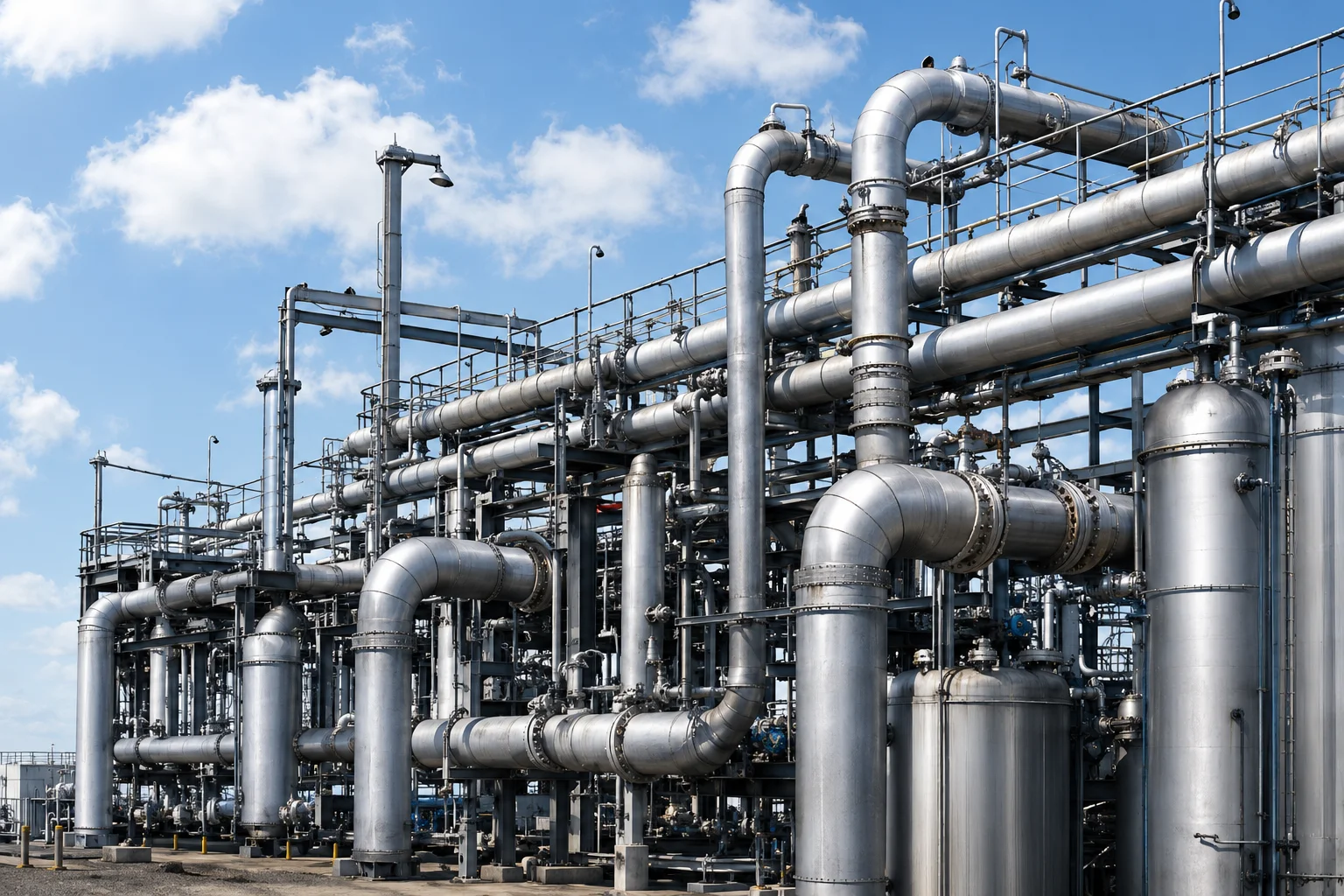
Flange meaning and common pipe flange types used to connect industrial piping

Why It Matters for Pipe Components

A correct flange definition is more than a dictionary entry. Buyers, engineers, and suppliers use the word “flange” to describe components with very different geometries and duties. A weld neck flange transfers load through a tapered hub. A slip-on flange is fitted over the pipe and fillet welded. A blind flange closes an opening. A socket weld flange receives the pipe in a recessed socket. A lap joint assembly uses a loose backing flange with a stub end. An orifice flange adds pressure-tapping connections for flow measurement.

Confusing these designs can cause quotation errors, mismatched bores, unsuitable weld details, wrong bolt circles, poor gasket seating, or pressure-temperature limitations. The same nominal pipe size does not guarantee interchangeability. A flange must match the specified dimensional standard and rating system.

The term also matters for related products. Pipe fittings may have flanged ends, valves may have integral flanges, and fabricated spools may combine butt-weld fittings with flanged terminations. In each case, the flange affects installation space, maintenance access, alignment, joint integrity, and total project cost.

Methods, Parameters, or Process

A useful way to understand a flange is to separate its function from its specification.

ItemWhat It DescribesTypical Examples
FunctionWhat the connection doesJoin pipe, connect equipment, isolate a line, measure flow
Flange typeHow the flange connects or carries loadWeld neck, slip-on, blind, socket weld, threaded, lap joint
Nominal sizeThe piping size designationNPS or DN
RatingPressure-temperature rating familyASME Class or PN
MaterialBase material specification and gradeASTM A105, ASTM A182 F304/F316, ASTM A350 LF2
FacingGasket-contact geometryRF, FF, RTJ
BoreInternal opening matched to pipe or serviceStandard bore, schedule bore, custom bore
StandardDimensions, tolerances, marking, and rating rulesASME B16.5, ASME B16.47, EN 1092-1, ISO 7005
Joint materialsGasket and bolting selectionSpiral wound gasket, ring joint gasket, stud bolts

The common process for defining a flange requirement is:

1. Identify the piping design code and project specification. 2. Confirm the applicable flange standard and edition. 3. State nominal size and pressure class or PN rating. 4. Select the flange type based on service, pressure, welding, maintenance, and space. 5. Specify material grade and any low-temperature, sour-service, or corrosion requirements. 6. Define facing, surface finish, bore, pipe schedule, and branch or tapping details. 7. Specify gasket and bolting requirements as part of the complete joint. 8. Review dimensional compatibility before production or purchase.

Common flange types include:

Flange TypeBasic DescriptionTypical Use
Weld neckLong tapered hub, butt welded to pipeHigh-integrity pressure piping
Slip-onPipe slips through bore and is fillet weldedGeneral service where project rules permit
BlindSolid closure flangeLine isolation, inspection openings, future connections
Socket weldPipe enters a socket and is fillet weldedSmall-bore high-pressure piping
ThreadedInternal pipe thread, normally no weldLimited services and applications
Lap jointLoose backing flange used with stub endFrequent dismantling, lined pipe, corrosion-resistant systems
OrificeFlange pair with pressure tapsDifferential-pressure flow measurement
AnchorPipeline flange designed to transfer axial loadBuried or long-distance pipeline restraint points

Facing must also be correct. Raised face flanges concentrate gasket load on a smaller contact area. Flat face flanges provide a broad contact surface and are often used where mating equipment requires it. Ring type joint flanges use a machined groove and metallic ring gasket for demanding pressure and temperature services.

Pressure class is not simply a maximum pressure printed on the flange. Allowable pressure depends on material group and temperature. The project engineer should use the relevant pressure-temperature tables instead of assuming that “Class 150” means 150 psi in every condition.

Supplier and Inspection Checklist

  • Confirm the flange standard, edition, size range, and dimensional series.
  • State flange type, nominal size, class or PN, material grade, and facing.
  • For weld neck and socket weld flanges, confirm bore and matching pipe schedule.
  • Check outside diameter, thickness, hub dimensions, bolt circle, hole quantity, and hole diameter.
  • Verify facing height, groove geometry, and gasket-contact surface finish.
  • Review material test certificates and heat-number traceability.
  • Confirm heat treatment and mechanical testing where required by the material specification.
  • Inspect markings for manufacturer, size, class, material, heat number, and standard.
  • Use PMI when alloy or stainless grades require positive material verification.
  • Check for laminations, cracks, laps, machining damage, rust, coating defects, or flange-face dents.
  • Protect machined faces and bores during packing and international transport.
  • Confirm gasket and bolting compatibility before shipment, not only after installation.

Application to Pipe Fittings, Valves, and Flanges

Flanges create a bridge between welded piping and removable equipment. A butt-weld elbow may be welded into a spool that ends in a weld neck flange. A forged gate valve may have flanged ends that bolt directly into the line. A reducer may connect to a pump nozzle through a fabricated spool and matched flange. A blind flange may close a branch for future expansion.

For procurement, the flange description should follow the actual assembly. “6-inch flange” is incomplete. A usable request would identify the standard, type, size, class, facing, material, bore or schedule, quantity, and inspection documentation. When the flange connects to a valve, pump, heat exchanger, or vessel nozzle, the mating dimensions and facing must be checked carefully.

For manufacturers and exporters, a technically complete flange page should connect definitions to real purchasing information: available standards, materials, sizes, pressure classes, dimensions, inspection, packing, and customization. This supports both informational searches and qualified RFQs.

FAQ

What is the simplest flange meaning?

A flange is a rim or ring used to connect components. In piping, two flanges are usually bolted together with a gasket between their faces to create a detachable sealed joint.

What does flanged mean?

Flanged means fitted with a flange or made for a flange connection. A flanged pipe, valve, or fitting has a flange at one or more ends.

Are all flanges interchangeable?

No. Flanges must match in dimensional standard, nominal size, rating, bolt pattern, facing, and gasket arrangement. Material and pressure-temperature suitability must also be checked.

What is the difference between a flange and a coupling?

A flange usually forms a bolted joint using two matching faces and a gasket. A coupling generally joins pipe ends through a sleeve, threads, welding, compression, grooves, or another mechanical mechanism. Some waterworks products are called flanged coupling adapters because one end is a flange and the other grips a plain pipe.

Why are flanges used instead of welding everything permanently?

Flanges make equipment and piping sections easier to assemble, inspect, clean, isolate, or replace. They are especially useful around valves, pumps, meters, vessels, strainers, and maintenance points.

Does Class 150 mean the flange can always operate at 150 psi?

No. A class designation identifies a pressure-temperature rating family. The allowable pressure changes with material and temperature and must be taken from the applicable standard and project design basis.

Next Steps

Prepare the flange inquiry with the standard, size, rating, type, facing, material, pipe schedule, quantity, service condition, and required certificates. For a precise quotation, include a datasheet, line-class specification, drawing, or photograph of the mating connection.

Request a Quote

関連メモ

Socket Weld Flange Guide: Design, Sizes, Welding, and Inspection
製品の選択

Socket Weld Flange Guide: Design, Sizes, Welding, and Inspection

A detailed guide to socket weld flanges for small-bore piping, covering socket geometry, pressure class, pipe schedule, welding, corrosion concerns, inspection, and RFQ details.

Orifice Flange Guide: Types, Standards, Tappings, and Inspection
製品の選択

Orifice Flange Guide: Types, Standards, Tappings, and Inspection

A practical guide to orifice flange sets for differential-pressure flow measurement, covering standards, flange styles, tap arrangements, materials, bore details, and inspection.

Anchor Flange Guide: Purpose, Design Inputs, and Inspection
製品の選択

Anchor Flange Guide: Purpose, Design Inputs, and Inspection

A buyer-focused explanation of anchor flanges used to transfer longitudinal pipeline loads into an anchor structure, including design inputs, materials, welding, inspection, and documentation.

河北省 河北省

オンラインカスタマーサービス

ジエ・アイジョン

いつでもご質問ください。ただ早期返信レターします。