ملخص
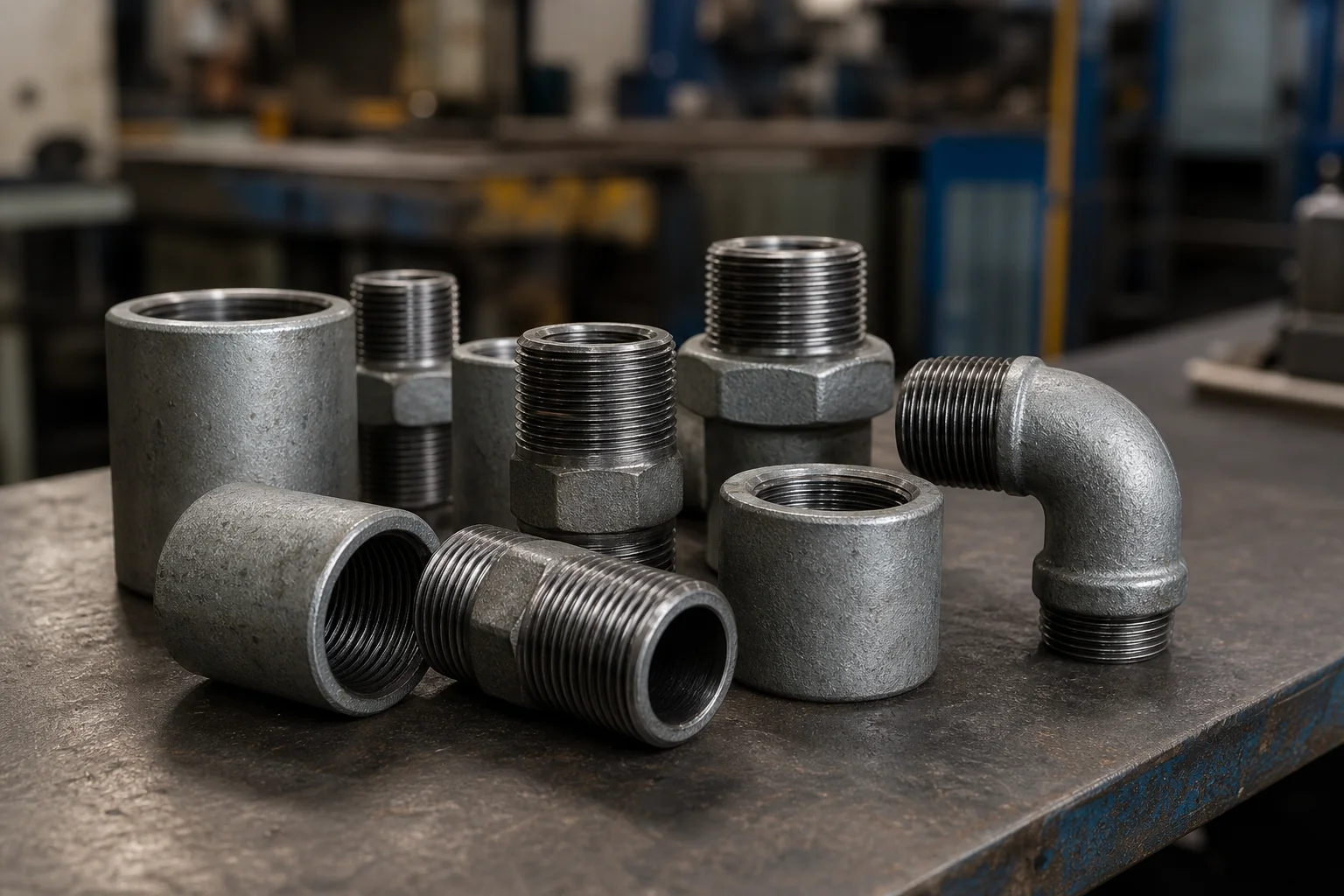
تقوم الأنابيب والتجهيزات الملولبة بإنشاء وصلات ميكانيكية باستخدام الخيوط الداخلية والخارجية المتزاوجة. تشمل المنتجات الشائعة الأكواع، والمحملات، والوصلات، والنقابات، ومخفضات السرعة، والبطانات، والحلمات، والمقابس، والأغطية. يتم استخدامها على نطاق واسع في خطوط المرافق الصغيرة والهواء والماء والأدوات والصرف والعمليات حيث تسمح مواصفات الأنابيب بمفاصل ملولبة.
يجب تحديد معيار الخيط بوضوح. NPT، وBSPP، وBSPT، والمتري، وأشكال الخيوط الأخرى غير قابلة للتبديل تلقائيًا.
لماذا يهم لمكونات الأنابيب
قد يؤدي عدم تطابق الخيط إلى حدوث تسرب أو تلف للخيط أو تجميع غير آمن. حتى عندما يبدو أن اثنين من التركيبات مترابطة، فإن الاختلافات في زاوية الخيط، والميل، والتفتق، وطريقة الختم قد تمنع وجود وصلة موثوقة.
فئة المواد والضغط مهمة أيضًا. تختلف التركيبات الملولبة المزورة لخدمة العمليات عن تركيبات السباكة الخفيفة. قد تتدلى خيوط الفولاذ المقاوم للصدأ دون الانتهاء من التصنيع وممارسة التجميع بشكل صحيح. يمكن أن تؤثر الطلاءات المجلفنة على ملاءمة الخيط إذا لم يتم التحكم فيها.
الأساليب أو المعلمات أو العملية
حدد نظام الاتصال أولاً.
| المعلمة | خيارات | مذكرة الشراء |
|---|---|---|
| شكل الموضوع | NPT، NPTF، BSPP، BSPT، متري، خاص بالمشروع | الدولة المعيار الدقيق |
| نوع الخيط | داخلي، خارجي، ذكر وأنثى | تحديد كل نهاية |
| نوع المناسب | الكوع، نقطة الإنطلاق، اقتران، الاتحاد، جلبة، المكونات، غطاء | وظيفة المباراة |
| مادة | الكربون الصلب، الفولاذ المقاوم للصدأ، الحديد القابل للطرق، النحاس، السبائك | خدمة المباراة |
| الدرجة أو التصنيف | الطبقة القياسية، الطبقة المزورة، تصنيف الضغط | لا تستنتج من الحجم |
| طريقة الختم | تداخل الخيط، الشريط، المركب، الحشية، الحلقة O | يجب أن يتناسب مع تصميم الخيط والسوائل |
| ينهي | أسود، مجلفن، مطلي، تخميل | ضع في اعتبارك التآكل وملاءمة الخيط |
بالنسبة للتجهيزات الصناعية المطروقة، يجب على المشتري تحديد معيار الأبعاد، ومواصفات المواد، والفئة، والخيط النهائي، وأي متطلبات تأثير أو صلابة. بالنسبة للمحولات ذات الأطراف المختلطة، يجب إدراج كل جانب بشكل منفصل.
قد يشمل فحص الخيط درجة الميل، والاستدقاق، والقطر الفعال، وارتباط المقياس، وحالة القمة والجذر، والفحص البصري للتأكد من عدم وجود تمزق أو نتوءات.
قائمة مراجعة الموردين والتفتيش
- اذكر معيار الخيط الدقيق والتسمية.
- تحديد اتصال ذكر أو أنثى لكل نهاية.
- التحقق من الحجم الاسمي وفئة الضغط.
- تحقق من مادة التركيب ومواد الأنابيب المتوافقة.
- تتطلب مقاييس موضوع معايرة.
- افحص عمق الخيط، والاستدقاق، والملعب، والمشاركة.
- تحقق من الخيوط بحثًا عن نتوءات وتمزقات وخدوش وتراكم الطلاء.
- تأكد من أن الجلفنة أو الطلاء لا يمنع التجميع.
- التحقق من العلامات وإمكانية التتبع الحراري للمنتجات المزورة.
- مراجعة متطلبات الاختبار الهيدروستاتيكي أو الهوائي حيثما ينطبق ذلك.
- تحديد واقيات الخيوط والتعبئة المقاومة للرطوبة.
- منع مطاردة الخيوط أو إصلاحها غير المصرح به بعد الفحص النهائي.
التطبيق على تجهيزات الأنابيب والصمامات والشفاه
تقوم التركيبات الملولبة في كثير من الأحيان بتوصيل أجهزة القياس والمصارف والفتحات والصمامات الصغيرة وجذور الأجهزة وملحقات المعدات. يجب أن يتطابق خيط منفذ الصمام مع خيط التركيب تمامًا. يمكن استخدام الفلنجات الملولبة عندما يكون اللحام مقيدًا، ولكن يجب التحقق من قيود التصنيف والخدمة مقابل كود الأنابيب.
قد تتطلب الأنظمة المختلطة محولات ملولبة إلى مقبس، أو ملولبة إلى أنبوب، أو مهايئات ملولبة إلى الحافة. وينبغي تحديد نقاط التحول هذه بوضوح في الرسومات وقوائم المواد.
التعليمات
هل خيوط NPT وBSP متوافقة؟
لا، فهي تختلف في الشكل الهندسي وسلوك الختم. قد تبدو وكأنها متصلة جزئيًا، لكن لا ينبغي معاملتها على أنها قابلة للتبديل.
ما هو الفرق بين اقتران والاتحاد؟
تقوم أداة التوصيل بربط طرفي الأنابيب الملولبين وتتطلب عادةً تدوير مكون واحد أثناء التجميع. يمكن فصل الوحدة دون تدوير الأنبوب المتصل.
متى يجب تجنب التركيبات الملولبة؟
قد يتم تقييدها في الخدمة الدورية الشديدة، أو الاهتزاز العالي، أو خدمة التسرب الخطرة، أو درجة الحرارة المرتفعة جدًا، أو حيث يتطلب رمز الأنابيب وصلات ملحومة.
كيف يتم إغلاق المفاصل الملولبة؟
اعتمادًا على نظام الخيط، قد يأتي الختم من تداخل الخيط، أو الشريط أو المركب المعتمد، أو الحشية، أو الختم المرتبط، أو الحلقة O. يجب أن تتطابق طريقة الختم مع تصميم الاتصال وسائل المعالجة.
الخطوات التالية
بالنسبة لكل عنصر سطر، قم بتوفير نوع التركيب والحجم والمواد وفئة الضغط ومعيار الخيط وترتيب النهاية للذكور أو الإناث والتشطيب والكمية والفحص والشهادة. قم بتضمين تفاصيل مكونات التزاوج عندما يكون التوافق أمرًا بالغ الأهمية.
طلب عرض أسعار