ملخص
BSP وNPT هما نظامان مختلفان لخيوط الأنابيب. NPT عبارة عن خيط أنابيب مدبب أمريكي مغطى بـ ASME B1.20.1. يشير BSP عادةً إلى خيوط BSPP/G المتوازية أو خيوط سلسلة BSPT/R المستدقة المرتبطة بأنظمة ISO. وهي تختلف في المظهر الجانبي ومجموعات النغمات والأقطار والتسميات وترتيبات الختم.
يجب التعامل مع BSP vs NPT على أنها مسألة توافق. الأجزاء التي تبدأ بالربط معًا ليست بالضرورة مناسبة لخدمة الضغط.
لماذا يهم لمكونات الأنابيب
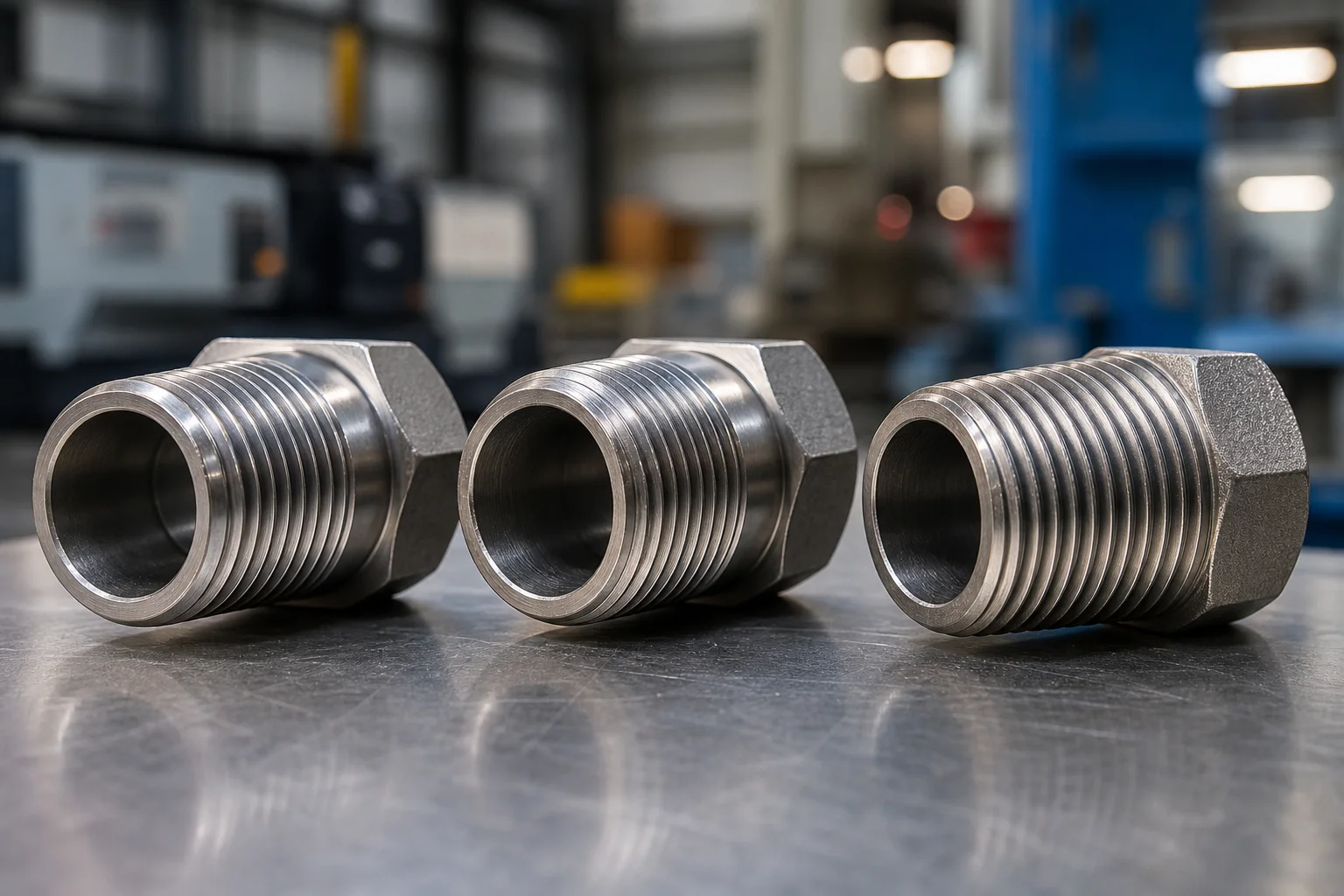
يستخدم NPT نموذج خيط بزاوية 60 درجة، بينما تعتمد نماذج BSP على ملف تعريف بزاوية 55 درجة. يمكن أن تختلف درجة الصوت أيضًا حسب الحجم الاسمي. تعمل هذه الاختلافات على تغيير جهة الاتصال والمشاركة وتوزيع الحمل. قد يؤدي الاشتباك الجزئي إلى إتلاف كلا الجزأين وإنشاء ختم غير موثوق به.
BSPP متوازي ويستخدم عمومًا ختمًا منفصلاً. يستخدم BSPT نماذج التزاوج المدببة وذات الصلة المخصصة للختم القائم على الخيط في ظل النظام المعمول به. إن NPT مدبب ويتم تجميعه بشكل شائع باستخدام مادة مانعة للتسرب معتمدة.
غالبًا ما تستخدم الصمامات والأدوات المستوردة منافذ BSP، بينما تستخدم الأنابيب في أمريكا الشمالية غالبًا NPT. يعد المحول المحدد بشكل صحيح أكثر أمانًا من تجميع الخيوط المختلطة.
الأساليب أو المعلمات أو العملية
استخدم العديد من الميزات معًا لتحديد موضوع غير معروف.
| ميزة | معاهدة حظر الانتشار النووي | عائلة بي إس بي |
|---|---|---|
| مرجع | ASME B1.20.1 لمعاهدة عدم انتشار الأسلحة النووية للأغراض العامة | ISO 228 لـ G؛ ISO 7 لترتيبات الضغط المحكم |
| زاوية الموضوع | 60 درجة | 55 درجة |
| تفتق / موازية | معاهدة حظر الانتشار النووي مدببة | BSPP الموازي؛ يستخدم BSPT أشكال تفتق/تزاوج محددة |
| التسميات | معاهدة حظر الانتشار النووي؛ تستخدم أنظمة الختم الجاف تسميات أخرى | قد تظهر G، R، Rc، Rp |
| ختم | تداخل الخيط بالإضافة إلى مانع التسرب المعتمد | ختم منفصل لـ BSPP؛ الختم المحدد من قبل النظام لـ BSPT |
| قابلية التبادل | غير قابلة للتبديل مع BSP | غير قابلة للتبديل مع معاهدة حظر الانتشار النووي |
قائمة مراجعة الموردين والتفتيش
- اقرأ الرسم وورقة البيانات وعلامات المنفذ.
- تحديد الشكل الداخلي أو الخارجي.
- تحقق من الاستدقاق بطول كافٍ.
- قياس الملعب أو TPI.
- قارن بين الملف الشخصي والأقطار الخاضعة للتحكم.
- استخدم المقياس المحدد القياسي.
- فحص الخيوط المتقاطعة وتراكم المواد المانعة للتسرب.
- تأكيد موقع الختم المقصود.
- استخدم محولًا مصنّفًا للتحويل.
- سجل الخيط المحدد في وثائق المعدات.
التطبيق على تجهيزات الأنابيب والصمامات والشفاه
ينبغي طلب الأكواع الملولبة، والمحملات، والوصلات، والتجهيزات المطروقة وفقًا للنظام الدقيق. قد تحتوي الصمامات على BSP في أحد إصدارات السوق وNPT في إصدار آخر حتى عندما يبدو الجسم متطابقًا.
غالبًا ما تقدم الأجهزة منافذ BSPP مع غسالات مرتبطة، بينما قد تستخدم أنابيب المعالجة NPT. يجب أن يتم تصنيف محول الانتقال لنطاق الضغط ودرجة الحرارة الكامل.
بالنسبة لخدمة الغاز، استخدم فقط المكونات والمواد المانعة للتسرب المعتمدة. الخيوط المختلطة ليست طريقة تكيف مقبولة.
التعليمات
هل يمكن أن يتناسب BSP و NPT معًا؟
وقد تتفاعل جزئيًا في بعض الأحجام، ولكنها ليست وصلة قابلة للتبديل يمكن التحكم فيها.
ما هو الفرق البصري الرئيسي؟
تختلف زاوية الخيط، لكن الفحص البصري وحده لا يمكن الاعتماد عليه. تحقق من الاستدقاق والملعب والملف الشخصي والأبعاد.
هل BSPT هو نفس معاهدة حظر الانتشار النووي؟
كلا، يمكن أن يتضمن كلاهما خيوطًا مدببة، لكن أشكالهما وأبعادهما تختلف.
هل BSPP هو نفس BSPT؟
لا، إن BSPP متوازي ويستخدم عادةً ختمًا منفصلاً. يستخدم BSPT ترتيبات مدببة محكمة الضغط.
كيف يجب أن يوضح طلب عرض الأسعار الموضوع؟
استخدم التعيين الدقيق والحجم الاسمي والجنس والمعايير وطريقة الختم والمواد والتقييم.
الخطوات التالية
لا توافق على اتصال غير معروف عن طريق التجميع التجريبي. قم بقياسه وقياسه، ثم استخدم محولًا تم تصنيفه بشكل صحيح عندما يجب توصيل BSP وNPT.
طلب عرض أسعار