Überblick
Das WichtigsteArten von Flanschenunterscheiden sich darin, wie sie an das Rohr angeschlossen werden, wie sie abdichten und welche Funktion sie erfüllen. Gängige Beispiele sind Schweißhals-, Aufsteck-, Blind-, Muffenschweiß-, Gewinde-, Überlappungs-, Öffnungs-, lange Schweißhals-, Platten- und Leitungszuschnitt-Anordnungen. Die Auswahl muss der Rohrleitungsklasse und der Projektspezifikation entsprechen.
Warum es für Rohrkomponenten wichtig ist
Die Verwendung des richtigen Flanschtyps wirkt sich auf die Schweißkonstruktion, die Ausrichtung, die Wartung, die Korrosionsbelastung, den Inspektionszugang und die Kosten aus. Ein Typ, der einfach herzustellen ist, wird möglicherweise nicht für den Service akzeptiert. Ein Hochleistungstyp kann die Kosten erhöhen, ohne einen Mehrwert zu schaffen, wenn die Rohrleitungsklasse dies nicht erfordert.
Der Flanschtyp ist nur ein Teil der Bezeichnung. Norm, Größe, Nennleistung, Material, Verkleidung, Bohrung, Dichtung, Verschraubung und Dokumentation müssen ebenfalls angegeben werden.
Methoden, Parameter oder Prozess
Verwenden Sie diesen Vergleich als Auswahlrahmen und nicht als Ersatz für den Designcode.
| Flanschtyp | Verbindung oder Funktion | Hauptkritikpunkt |
|---|---|---|
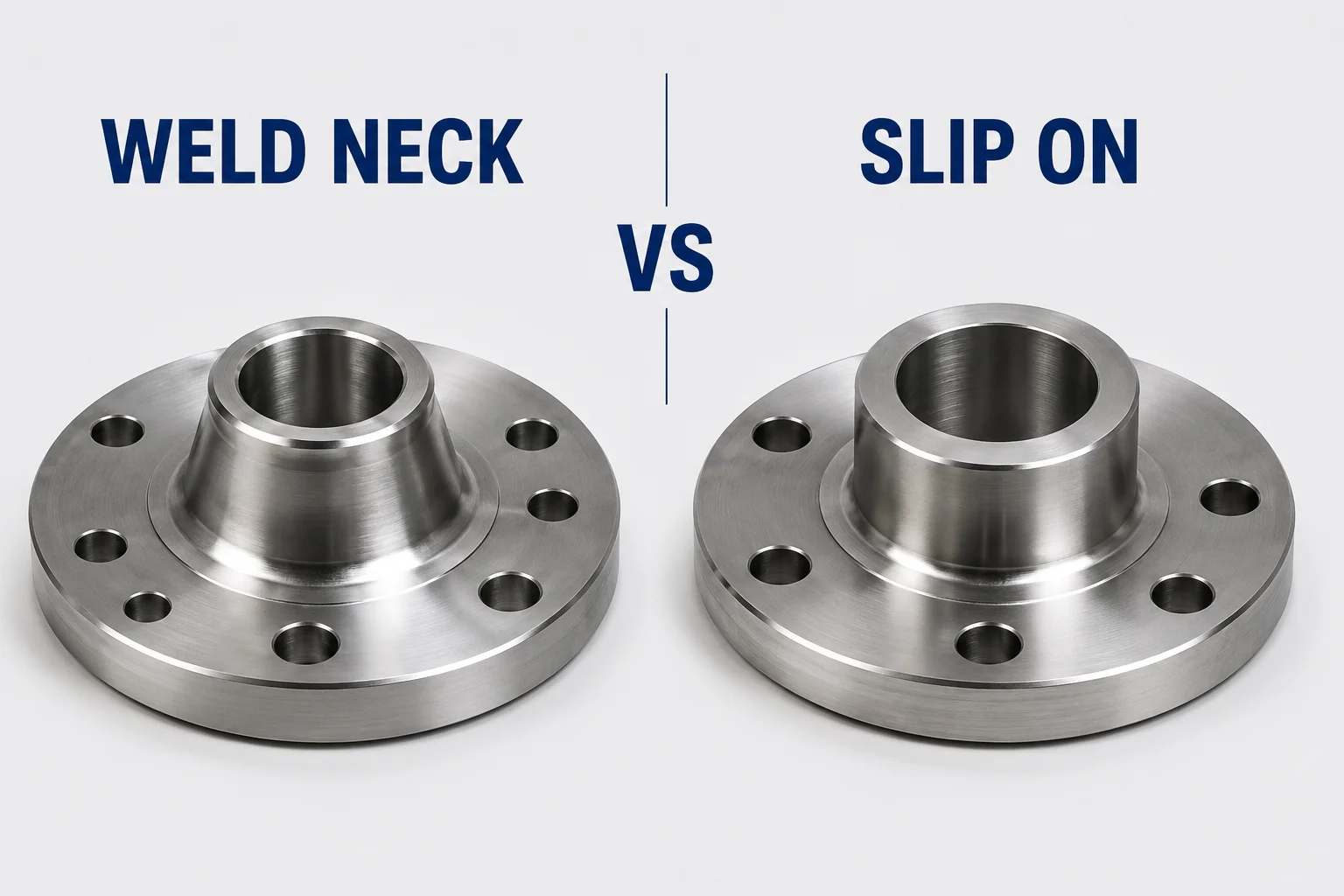
| Schweißhals | Stumpfgeschweißte Nabe | Bohrungsübereinstimmung und Schweißqualität |
| Zum Hineinschlüpfen | Wird über das Rohr geschoben und kehlgeschweißt | Passung und Verzerrung |
| Blind | Verschließt eine Flanschöffnung | Druckschub und Dicke |
| Muffenschweißen | Das Rohr wird in eine bearbeitete Muffe eingeführt | Passspiel und Kehlnaht |
| Mit Gewinde | Gewindeanschluss | Thread-Form und Service-Einschränkungen |
| Überlappungsgelenk | Loser Stützflansch mit Stummelende | Kompatibilität zwischen Flansch und Stutzen |
| Öffnung | Hält eine Blende und Druckanschlüsse | Gewindebohrer- und Bohrungsausrichtung |
| Langer Schweißhals | Verlängerte Halsverbindung | Projektzeichnung und Düsendesign |
| Plattenflansch | Hergestellt aus Blech nach einer genehmigten Norm oder Zeichnung | Produktform- und Dimensionskontrolle |
| Brillenrollo | Rotierender Schnurrohling und Abstandshalter | Isolierungsverfahren und Handhabung |
Beginnen Sie mit der zugelassenen Rohrleitungsklasse. Bestätigen Sie dann die Verbindungsmethode, die erwarteten Belastungen, den Korrosionsmechanismus, die Temperatur, den Druck, den Herstellungsort, die Wartungsstrategie und den Inspektionsplan.
Verifizierungshinweis:Einige Spezialitätennamen werden in den verschiedenen Märkten unterschiedlich verwendet. Fordern Sie den Lieferanten auf, ein Angebot anhand einer Zeichnung und Norm und nicht nur anhand eines Handelsnamens anzubieten.
Checkliste für Lieferanten und Inspektionen
- Bestätigen Sie, dass der Flanschtyp von der Leitungsklasse zugelassen wird.
- Geben Sie Norm, Auflage, Größe, Nennleistung, Material und Verkleidung an.
- Passen Sie die Bohrung oder Muffe an das Rohr an.
- Definieren Sie Schweißnaht-, Gewinde- oder Stutzendetails.
- Dichtungs- und Verschraubungsbasis angeben.
- Überprüfen Sie die Rückverfolgbarkeit des Materials und die erforderlichen Tests.
- Überprüfen Sie die Abmessungen und den Zustand der Verkleidung.
- Erfassen Sie Abweichungen vor der Kaufgenehmigung.
Anwendung auf Rohrverbindungen, Ventile und Flansche
Rohrverbindungen, Ventile, Pumpen, Tanks und Druckgeräte können an verschiedenen Stellen unterschiedliche Flanschtypen verwenden. Ein Ventil kann integrierte Flanschenden haben, während die angrenzende Spule Schweißhalsflansche verwendet. Eine korrosionsbeständige Linie kann eine Überlappungsverbindungsbaugruppe verwenden, um benetzte Materialien und Trägermaterialien zu trennen.
Überprüfen Sie bei verpackter Ausrüstung, ob der Düsenstandard des Herstellers mit dem Rohrleitungsstandard der Anlage übereinstimmt. Übergangsstücke sollten konstruiert und nicht dadurch gelöst werden, dass nicht passende Flansche zusammengepresst werden.
FAQ
Welcher Flanschtyp ist am stärksten?
Die Festigkeit kann nicht ohne die Größe, das Material, die Nennleistung, die Temperatur, die Lasten und die Coderegeln eingestuft werden. Vorschweißflansche werden häufig für anspruchsvolle Aufgaben ausgewählt, es kommt jedoch auf die Konstruktionsgrundlage an.
Welcher Typ ist am einfachsten zu installieren?
Aufsteck- und Überlappungsverbindungen können in manchen Fällen die Ausrichtung vereinfachen. Die einfache Installation muss mit den Service- und Codeanforderungen in Einklang gebracht werden.
Sind Blindflansche eine Verbindungsart?
Es handelt sich eher um funktionelle Verschlussflansche als um Rohr-zu-Rohr-Verbindungen.
Können verschiedene Flanschtypen miteinander verschraubt werden?
Nur wenn ihre Standards, Nennwerte, Verkleidungen, Abmessungen und Verbindungsdesign kompatibel und zugelassen sind.
Nächste Schritte
Wandeln Sie die Linienklassenanforderung in eine vollständige Einkaufsbezeichnung um. Bei unbekannten oder speziellen Flanschnamen fügen Sie eine Zeichnung bei und bitten Sie den Lieferanten, den Herstellungsstandard und die Produktform zu bestätigen.
Fordern Sie ein Angebot an