Panoramica
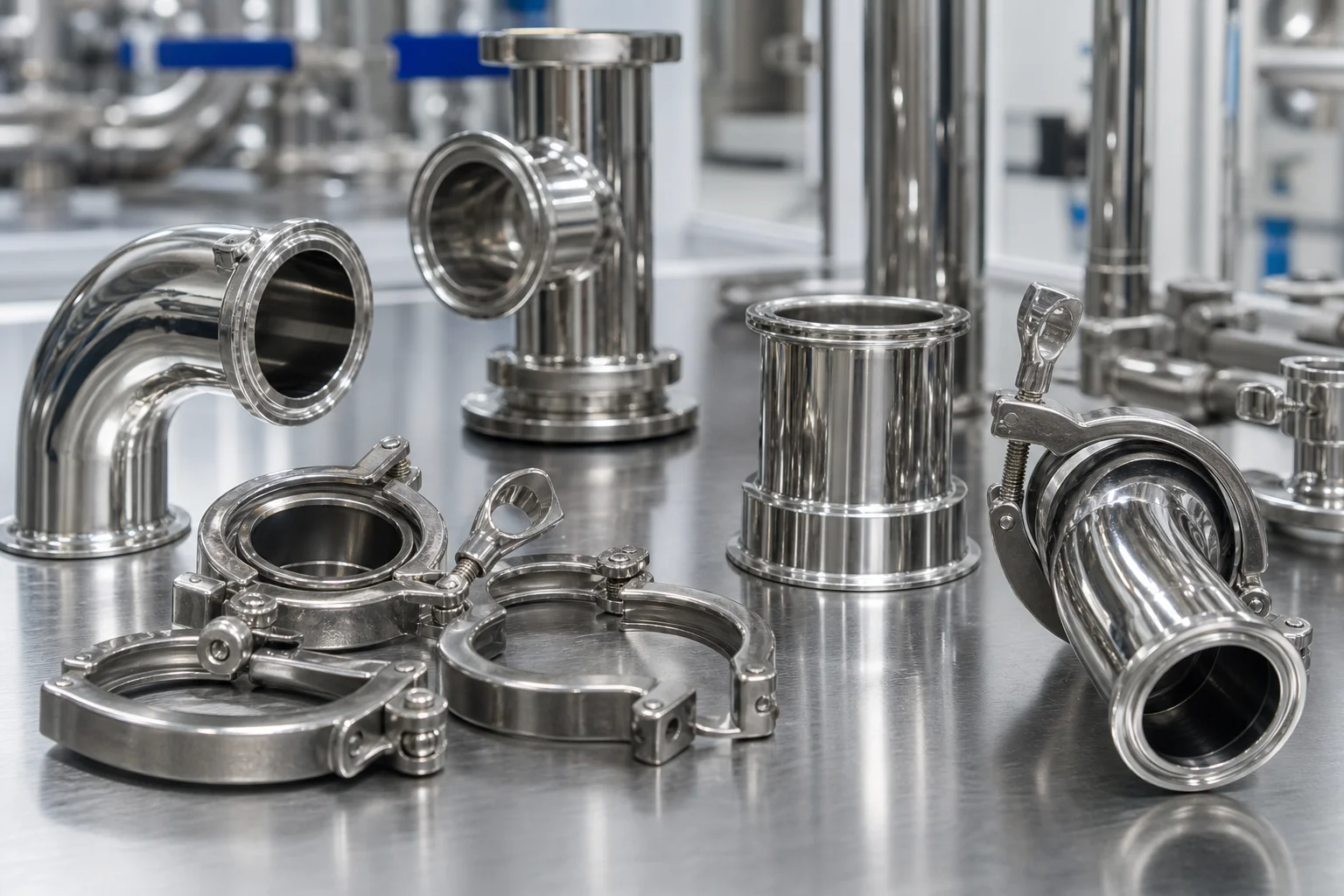
I tubi e i raccordi sanitari sono progettati per sistemi pulibili utilizzati nei processi alimentari, delle bevande, dei latticini, farmaceutici, biotecnologici, cosmetici e altri processi igienici. I componenti comuni includono tubi in acciaio inossidabile lucidato, gomiti, raccordi a T, riduttori, ghiere, morsetti, raccordi, spie e valvole sanitarie.
La selezione si concentra non solo sulla pressione e sulle dimensioni, ma anche sulla drenabilità, sulla pulibilità, sulla finitura superficiale, sulla qualità della saldatura, sulla compatibilità delle guarnizioni e sull'assenza di fessure che intrappolano il prodotto.
Perché è importante per i componenti delle tubazioni
Un raccordo meccanicamente resistente può comunque non essere adatto al servizio igienico se la superficie interna è ruvida, la saldatura è scarsamente raccordata, la guarnizione si intromette nel foro o la geometria intrappola il prodotto. Queste condizioni possono rendere difficile la pulizia e aumentare il rischio di contaminazione.
I sistemi sanitari utilizzano anche dimensionamenti dei tubi e profili di collegamento speciali che potrebbero non corrispondere ai normali raccordi per tubi industriali. La combinazione di ghiere, morsetti, guarnizioni e dimensioni di tubi provenienti da sistemi incompatibili può creare problemi di tenuta e allineamento.
Metodi, parametri o processo
Definire le basi della progettazione igienica prima di selezionare i prodotti.
| Parametro | Requisito tipico |
|---|---|
| Materiale | 304, 316L o grado inossidabile specifico per il progetto |
| Sistema di dimensioni | Diametro esterno del tubo e spessore della parete |
| Connessione | Connessione di utenza a fascetta, a saldare, a bocchettone, asettica, flangiata, filettata |
| Finitura superficiale | Rugosità o lucidatura interna ed esterna definita |
| Geometria | Raggio drenabile, foro liscio, design a fessura ridotta |
| Guarnizione | EPDM, silicone, PTFE, FKM o materiale approvato |
| Pulizia | CIP, SIP, pulizia manuale, sterilizzazione |
| Documentazione | MTC, rapporto sulla finitura superficiale, certificato di ispezione |
Per i sistemi saldati può essere specificata la saldatura orbitale o manuale controllata. Le estremità saldate devono avere parete, ortogonalità e adattamento coerenti. Lo scolorimento interno, la penetrazione, la mancata corrispondenza e la ruvidità devono essere valutati in base ai criteri di accettazione del progetto.
Le connessioni a morsetto richiedono profili della ghiera, dimensioni della guarnizione e valori nominali del morsetto compatibili. È necessario controllare il giunto completo anziché ciascun componente separatamente.
Lista di controllo dei fornitori e delle ispezioni
- Confermare il diametro esterno del tubo e lo spessore della parete.
- Verificare la tracciabilità del grado inossidabile e del numero di calore.
- Definire la finitura superficiale interna ed esterna.
- Ispezionare la direzione e l'uniformità della lucidatura.
- Verificare la presenza di cavità, graffi, inclusioni e contaminazione incorporata.
- Verificare la compatibilità del profilo della ghiera, della scanalatura della guarnizione e del morsetto.
- Misurare l'ortogonalità delle estremità e l'allineamento del foro.
- Esaminare i requisiti di preparazione e procedura di saldatura.
- Ispezionare la penetrazione e lo scolorimento della saldatura interna.
- Confermare il decapaggio, la passivazione o l'elettrolucidatura dove specificato.
- Utilizzare un imballaggio pulito con le estremità tappate.
- Prevenire la contaminazione dell'acciaio al carbonio durante la produzione e lo stoccaggio.
Applicazione a raccordi per tubi, valvole e flange
I raccordi sanitari si collegano a valvole sanitarie, pompe, serbatoi, strumenti, filtri e scambiatori di calore. Ogni connessione dovrebbe preservare il foro igienico e il percorso di pulizia. Le sedi delle valvole, i materiali delle guarnizioni, i profili delle ghiere e la finitura superficiale devono essere coordinati con i raccordi adiacenti.
È possibile utilizzare normali flange industriali ai confini delle utenze o delle apparecchiature, ma la transizione deve essere progettata in modo da evitare punti morti e problemi di pulizia.
Domande frequenti
Qual è la differenza tra tubo sanitario e tubo normale?
I sistemi sanitari utilizzano solitamente dimensioni controllate dei tubi, superfici interne più lisce, design dei giunti igienici e requisiti di pulizia più rigorosi.
Il 316L è sempre necessario?
No. La scelta del materiale dipende dalla chimica del prodotto, dai detergenti, dalla temperatura, dal rischio di corrosione e dai requisiti del settore. 316L è comune ma non universale.
Cosa significa finitura superficiale?
La finitura superficiale descrive la struttura o la ruvidità della superficie. I progetti igienici possono specificare una rugosità massima e un particolare processo di lucidatura o elettrolucidatura.
Tutti i raccordi a morsetto sono intercambiabili?
No. I profili della ghiera, le dimensioni, il design delle guarnizioni e i valori di pressione possono variare. I componenti di accoppiamento devono seguire lo stesso sistema.
Passaggi successivi
Inviare una specifica del componente igienico riguardante materiale, diametro esterno del tubo, parete, profilo di connessione, finitura superficiale, guarnizione, metodo di pulizia, saldatura, ispezione, marcatura e imballaggio pulito. Includere disegni approvati per ghiere e raccordi personalizzati.
Richiedi un preventivo