सिंहावलोकन
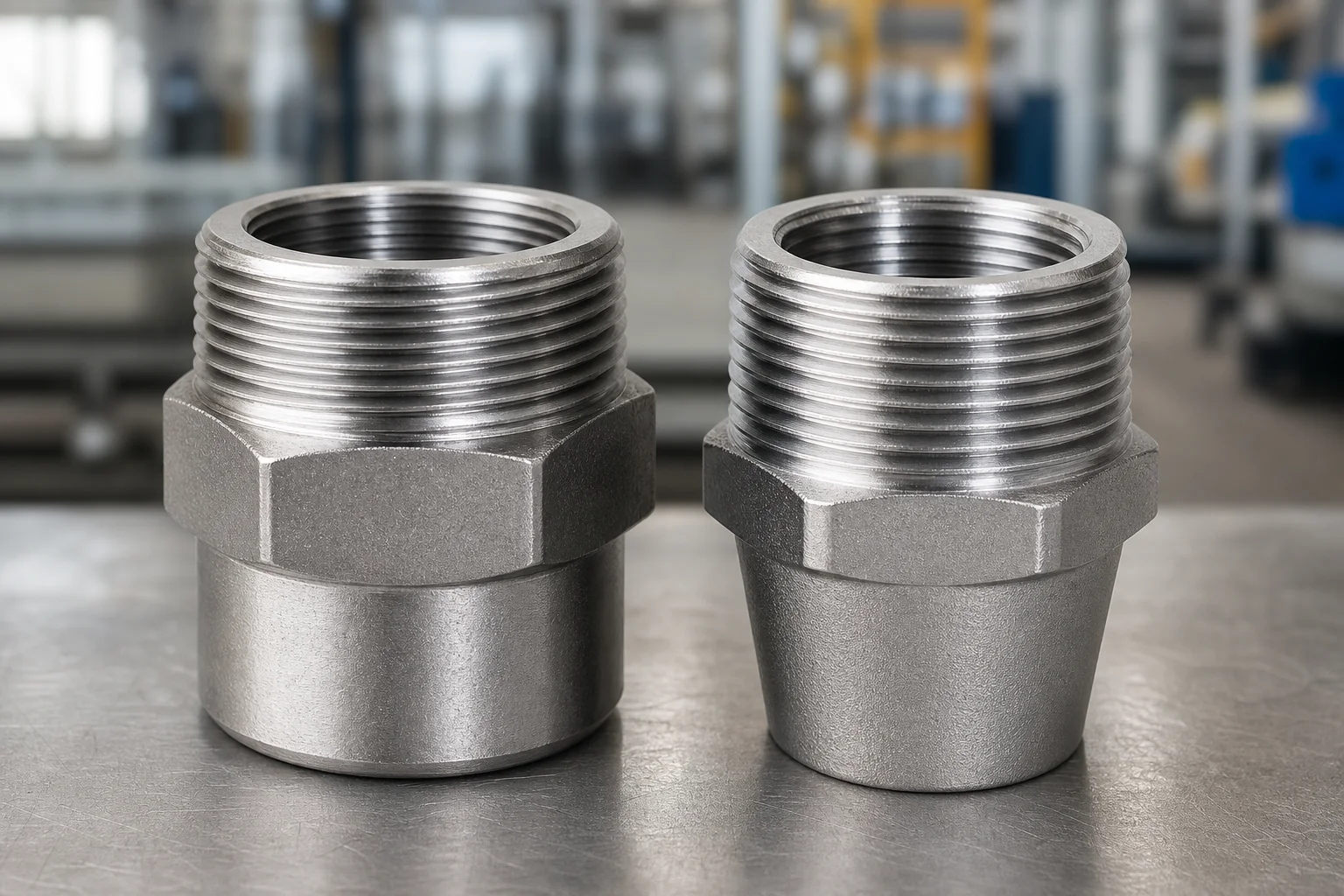
बीएसपीपी धागा एक ब्रिटिश मानक पाइप समानांतर धागा है, जिसे आमतौर पर जी अक्षर से नामित किया जाता है। दोनों संभोग धागे समानांतर हैं। आईएसओ 228-1 प्रणाली के तहत, इन बन्धन धागों का उद्देश्य अकेले धागे के हस्तक्षेप से दबाव-तंग जोड़ बनाना नहीं है। कनेक्शन आम तौर पर वॉशर, बॉन्डेड सील, ओ-रिंग, गैसकेट, या परिभाषित बैठने की सतह पर सील होता है।
बीएसपीपी थ्रेड चार्ट को इसके शासी मानक और संस्करण की पहचान करनी चाहिए। नाममात्र का आकार मापे गए प्रमुख व्यास के बराबर नहीं है, और किसी अज्ञात कनेक्शन को जबरदस्ती फिट करने के लिए चार्ट का उपयोग नहीं किया जाना चाहिए।
पाइप घटकों के लिए यह क्यों मायने रखता है
बीएसपीपी पोर्ट वाल्व, उपकरण, पंप, हाइड्रोलिक घटकों और अंतरराष्ट्रीय उपकरणों पर आम हैं। रिसाव अक्सर तब होता है जब एक इंस्टॉलर एक समानांतर जोड़ पर टेपर्ड-थ्रेड धारणाओं को लागू करता है। अतिरिक्त टेप गायब वॉशर, क्षतिग्रस्त सीट, गलत एडाप्टर या असंगत पोर्ट को ठीक नहीं कर सकता है।
बीएसपीपी और बीएसपीटी संबंधित 55-डिग्री थ्रेड फॉर्म का उपयोग करते हैं, लेकिन बीएसपीपी समानांतर है जबकि बीएसपीटी पतला दबाव-तंग व्यवस्था का उपयोग करता है। एनपीटी एक अलग प्रोफ़ाइल और आयामी प्रणाली का उपयोग करता है। नियंत्रित जोड़ बनाए बिना हिस्से कुछ मोड़ों के लिए जुड़ सकते हैं।
खरीद के लिए, जी 1/2 "आधा इंच ब्रिटिश धागे" से अधिक सटीक है, लेकिन पोर्ट ज्यामिति और सीलिंग विधि अभी भी ड्राइंग पर दिखाई देनी चाहिए।
तरीके, पैरामीटर, या प्रक्रिया
इन पहचान बिंदुओं की पुष्टि करने के बाद ही बीएसपीपी थ्रेड चार्ट का उपयोग करें।
| बिंदु | बीएसपीपी विशेषता | क्या सत्यापित करें? |
|---|---|---|
| पद का नाम | जी के बाद नाममात्र का आकार आता है | जहां निर्दिष्ट हो वहां सटीक अंकन और सहनशीलता |
| ज्यामिति | समानांतर आंतरिक और बाह्य धागा | थ्रेडेड लंबाई के साथ कोई टेपर नहीं |
| प्रोफ़ाइल परिवार | 55-डिग्री व्हिटवर्थ-व्युत्पन्न प्रपत्र | उपयुक्त गेज के साथ पिच और प्रोफ़ाइल |
| प्राथमिक मुहर | वॉशर, ओ-रिंग, गैसकेट, या सीट | सही सील और संपर्क सतह |
| नाम मात्र का आकार | एक पदनाम, प्रत्यक्ष प्रमुख व्यास नहीं | नियंत्रित मानक आयाम |
| निरीक्षण | आयामी या कार्यात्मक विधि | गेज प्रकार, अंशांकन, और सीमाएँ |
आपूर्तिकर्ता और निरीक्षण चेकलिस्ट
- पूर्ण जी-थ्रेड पदनाम और मानक बताएं।
- आंतरिक या बाह्य थ्रेड और पोर्ट ज्यामिति को परिभाषित करें।
- सीलिंग वॉशर, ओ-रिंग, गैसकेट, शंकु या फेस निर्दिष्ट करें।
- पिच मापें और समानांतर ज्यामिति की पुष्टि करें।
- कैलिब्रेटेड बीएसपीपी गेज का उपयोग करें, एनपीटी या बीएसपीटी गेज का नहीं।
- स्पॉट फेस, कंधे, चैम्बर और थ्रेड स्टार्ट का निरीक्षण करें।
- फिनिशिंग के बाद प्लेटिंग बिल्डअप की जांच करें।
- द्रव और तापमान के साथ इलास्टोमेर अनुकूलता की पुष्टि करें।
- डिज़ाइन किए गए सीलिंग तत्व को बदलने के लिए टेप का उपयोग न करें।
- पैकिंग के दौरान धागे और सीलिंग फेस को सुरक्षित रखें।
पाइप फिटिंग, वाल्व और फ्लैंज के लिए आवेदन
बीएसपीपी एडाप्टर वाल्व और उपकरणों को ट्यूब फिटिंग, होसेस, मैनिफोल्ड या पाइप सिस्टम से जोड़ते हैं। एडॉप्टर को जी थ्रेड और सीलिंग शैली दोनों से मेल खाना चाहिए। कुछ नर सिरों पर कंधे के नीचे एक बंधी हुई सील का उपयोग किया जाता है; अन्य लोग मशीनी चेहरे पर मुहर लगाते हैं।
औद्योगिक फिटिंग एक छोर पर बीएसपीपी और दूसरे छोर पर एनपीटी, बीएसपीटी, मीट्रिक या संपीड़न कनेक्शन को जोड़ सकती है। प्रत्येक सिरे को स्वतंत्र रूप से सूचीबद्ध किया जाना चाहिए।
गैस या खतरनाक तरल पदार्थों के लिए, केवल थ्रेड फॉर्म अनुमोदन की पुष्टि नहीं करता है। घटक रेटिंग, सील सामग्री, रिसाव आवश्यकताओं, लिस्टिंग और स्थानीय नियमों को सत्यापित करें।
अक्सर पूछे जाने वाले प्रश्न
क्या बीएसपीपी जी थ्रेड के समान है?
जी आईएसओ 228 प्रणाली में समानांतर पाइप थ्रेड्स के लिए सामान्य पदनाम है। संपूर्ण ड्राइंग सत्यापित करें.
क्या बीएसपीपी धागे पर मुहर लगाता है?
एक विशिष्ट बीएसपीपी जोड़ एक अलग सीलिंग तत्व या सीट पर निर्भर करता है।
क्या बीएसपीपी एनपीटी से जुड़ सकता है?
उन्हें संगत न मानें. उनकी प्रोफ़ाइल, पिच संबंध और सीलिंग के तरीके अलग-अलग हैं।
क्या थ्रेड टेप का उपयोग किया जा सकता है?
टेप वास्तविक सीलिंग स्थान को संबोधित नहीं कर सकता है। घटक और परियोजना निर्देशों का पालन करें.
बीएसपीपी चार्ट में क्या शामिल है?
नाममात्र पदनाम, नियंत्रित आयाम, पिच, सहनशीलता और मानक स्रोत।
अगले कदम
जी-थ्रेड पदनाम और सीलिंग फेस दिखाने वाली पोर्ट ड्राइंग के लिए पूछें। उसी आरएफक्यू में वॉशर या ओ-रिंग शामिल करें।
एक उद्धरण का अनुरोध करें