Overview
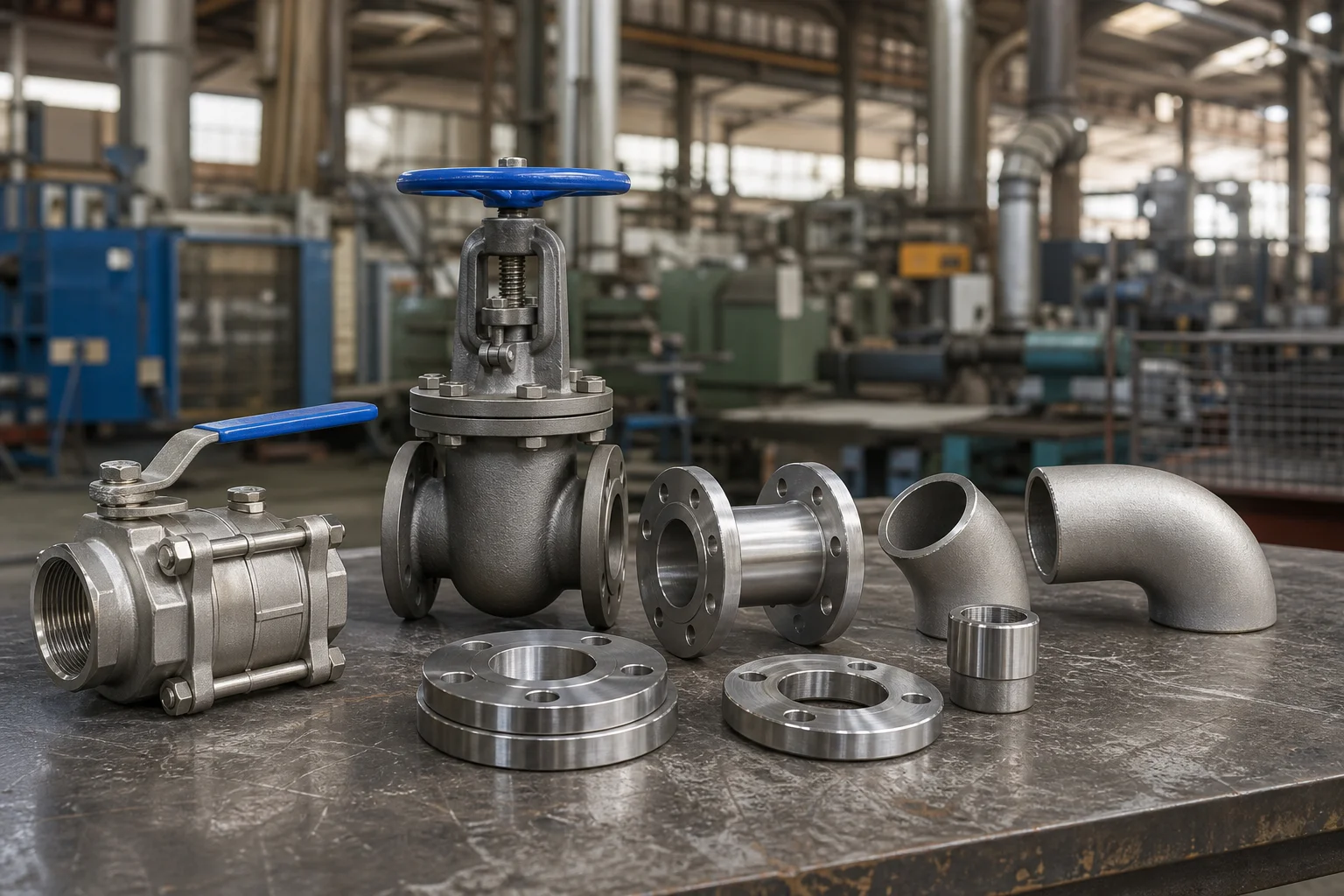
Pipe valves and fittings must be selected as one connected system. A valve controls or isolates flow, while fittings connect, branch, reduce, redirect, or terminate the pipeline. Compatibility depends on material, size, wall thickness, pressure class, end connection, bore, facing, gasket, bolting, and service conditions.
A valve and fitting may share the same nominal size but still be incompatible if they follow different standards or have mismatched ends.
Why It Matters for Pipe Components
System mismatches are expensive. A Class 300 valve cannot be connected correctly to a flange from another rating unless the complete joint is redesigned. A butt-weld valve with a heavy-wall end may need a tapered transition to thinner pipe. A threaded valve with NPT ports will not reliably match BSP fittings. A sanitary valve may require a specific clamp ferrule and gasket profile.
Coordinated purchasing also affects inspection and documentation. Valve pressure tests, fitting material certificates, flange dimensions, gasket materials, and bolt grades should all trace back to the same piping class.
Methods, Parameters, or Process
Use a connection matrix for each piping class.
| Interface | Parameters to match |
|---|---|
| Pipe to butt-weld valve | OD, wall, bore, material, bevel, welding procedure |
| Pipe to threaded valve | Thread form, male/female end, pressure rating, seal method |
| Valve to flange | Standard, size, class, facing, bolt pattern, gasket |
| Valve to compression fitting | Tube OD, wall, ferrule system, material |
| Branch fitting to valve | Run and branch size, reinforcement, orientation, connection |
| Sanitary valve to fitting | Tube OD, ferrule profile, gasket, surface finish |
The valve type should also suit the process function. Gate valves are commonly used for isolation, globe valves for throttling, check valves for reverse-flow prevention, ball valves for quick shutoff, and control valves for regulated flow. The adjacent fittings should provide acceptable flow and maintenance access.
Avoid placing severe reducers, elbows, or branches immediately next to equipment that requires a stable flow profile unless the design has considered the effect.
Supplier and Inspection Checklist
- Confirm valve and fitting materials belong to the approved piping class.
- Match size, schedule, pressure class, and temperature limits.
- Verify every end connection and standard.
- Review flange facing, gasket, and bolting as one joint.
- Check butt-weld end wall and bore transition.
- Confirm thread form and orientation.
- Review valve face-to-face dimensions and installation clearance.
- Check actuator access and maintenance removal space.
- Define valve pressure testing and fitting inspection separately.
- Require heat-number traceability and material certificates.
- Coordinate coating, lining, pickling, passivation, and cleanliness.
- Use one consolidated bill of materials and document index.
Application to Pipe Fittings, Valves, and Flanges
This topic directly connects the three main product groups. Fittings shape the route, valves control the process, and flanges create removable joints. Their interfaces must be engineered together.
For export supply, package review should include mating flange pairs, gaskets, bolts, valve ends, reducers, drain and vent fittings, and any required transition pieces. This reduces missing accessories and prevents incompatible deliveries.
FAQ
Can valves and fittings from different standards be combined?
Only after engineering confirms dimensional and pressure compatibility. Adapters may be required, and mixed standards should be documented clearly.
Why should valve bore and fitting bore be checked?
Large bore steps can increase turbulence, erosion, pressure loss, and welding difficulty. They may also interfere with pigging or cleaning.
Are valve pressure classes the same as pipe schedules?
No. Pressure class and pipe schedule are different systems. The piping specification determines how they are combined for the design conditions.
What documents are normally required?
Typical documents include valve test certificates, material certificates, fitting inspection reports, flange dimensional reports, coating records, and a consolidated certificate index.
Next Steps
Create a piping-class connection matrix listing every pipe, fitting, valve, flange, gasket, and bolting interface. Send the matrix with the RFQ and require suppliers to identify any deviation before quotation approval.
Request a Quote