Überblick
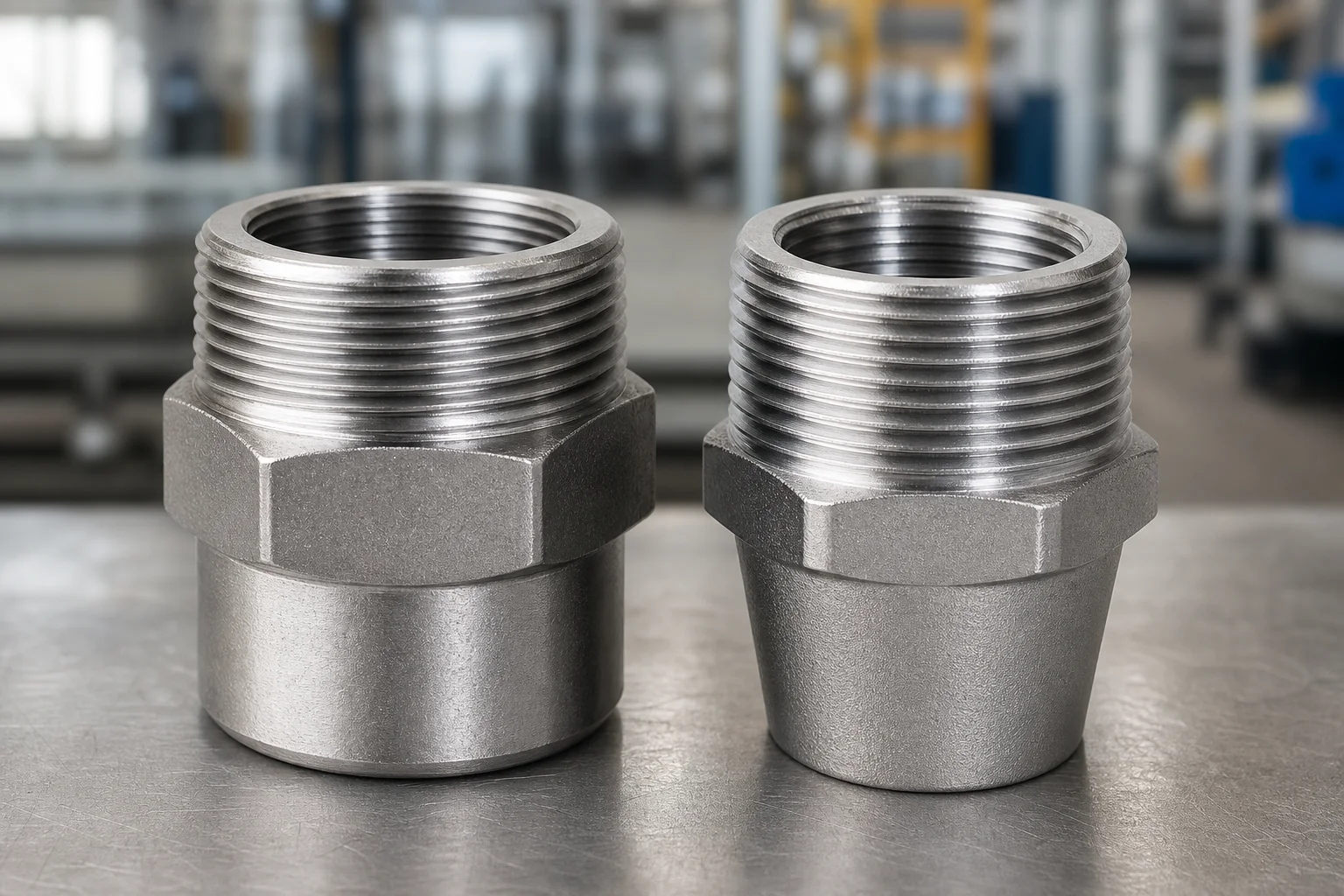
Ein 1/2 BSP-Gewinde ist keine vollständige technische Bezeichnung. Es kann sich auf ein paralleles BSPP-Gewinde G 1/2 gemäß ISO 228 oder auf eine druckdichte R-, Rc- oder Rp-Gewindeanordnung mit einem halben Zoll gemäß ISO 7 beziehen. Die genaue Bezeichnung bestimmt Konus, Passform, Stärke und Dichtung.
Die Nenngröße von einem halben Zoll ist nicht der direkt gemessene Gewindedurchmesser. Die Identifizierung sollte Markierung, Steigung, Konizität, Profil, kontrollierte Abmessungen und die Stelle umfassen, an der die Verbindung abgedichtet werden soll.
Warum es für Rohrkomponenten wichtig ist
Ein Lieferant kann „1/2 BSP“ als BSPP interpretieren, während der Kunde BSPT erwartet. Die Teile können die gleiche allgemeine Profilfamilie haben, jedoch unterschiedliche Geometrien und Dichtungsmethoden verwenden. Ein paralleler G-Anschluss benötigt normalerweise eine Unterlegscheibe, einen O-Ring, eine Dichtung oder einen Sitz. Eine druckdichte R/Rc/Rp-Anordnung dichtet entsprechend ihrer Gewindekonstruktion und zugelassenen Verbindungsmethode ab.
Eine Verwechslung mit 1/2 NVV schafft ein weiteres Risiko. NPT verwendet ein 60-Grad-Profil und ein anderes Maßsystem. Ein teilweises Engagement ist kein Beweis für die Kompatibilität.
Das Veröffentlichen eines BSP-Maßdiagramms ohne Nennung der Norm und der Toleranzklasse kann Benutzer irreführen. Projektartikel sollten den Identifizierungsprozess beschreiben und eine Überprüfung anhand des kontrollierten Standards erfordern.
Methoden, Parameter oder Prozess
Übersetzen Sie „1/2 BSP“ vor der Bestellung oder Montage in eine genaue Bezeichnung.
| Kommerzielle Formulierung | Mögliche technische Bedeutung | Primärdichtung |
|---|---|---|
| G 1/2 | Paralleles BSPP-Außen- oder Innenbefestigungsgewinde | Separate Unterlegscheibe, O-Ring, Dichtung oder Sitz |
| R 1/2 | Konisches druckdichtes Außengewinde | Schraubverbindung mit zugelassenem Fugenmaterial |
| Rc 1/2 | Konisches druckdichtes Innengewinde | Passt zu einer spezifizierten konischen Außenform |
| Rp 1/2 | Paralleles Innengewinde in ISO 7-Anordnung | Passend zum angegebenen R-Außengewinde |
| 1/2 BSP | Mehrdeutige Katalogkurzschrift | Muss geklärt werden |
| 1/2 NPT | Unterschiedliches amerikanisches konisches Gewindesystem | Nicht austauschbar mit BSP |
Checkliste für Lieferanten und Inspektionen
- Fragen Sie, ob der erforderliche Thread G, R, Rc oder Rp ist.
- Geben Sie die interne oder externe Form an.
- Bestätigen Sie den anwendbaren ISO- oder Projektstandard und die entsprechende Edition.
- Überprüfen Sie die Konizität, bevor Sie den Durchmesser messen.
- Verwenden Sie zur Identifizierung eine 55-Grad-Gewindesteigungslehre.
- Nutzen Sie zur Abnahme normspezifische Lehren.
- Identifizieren Sie die Dichtungsscheibe, den O-Ring, den Sitz oder die Gewindeverbindungsmethode.
- Schließen Sie 1/2 BSP nicht direkt an 1/2 NPT an.
- Bestätigen Sie die Druck- und Temperaturwerte des Produkts getrennt von der Gewindegröße.
- Schützen Sie die Dichtfläche und die Gewinde nach der Inspektion.
Anwendung auf Rohrverbindungen, Ventile und Flansche
Halbzoll-BSP-Anschlüsse sind bei Messgeräten, Reglern, Ventilen, Pumpen, pneumatischen Geräten, hydraulischen Komponenten und importierten Maschinen üblich. Ein einzelnes Ventil kann bei einem Modell G 1/2-Anschlüsse und bei einem anderen 1/2 NPT-Anschlüsse haben.
Adapter müssen beide Enden, Material, Druckstufe und Dichtungstyp identifizieren. Bei Rohrverschraubungen mit Gewinde sollten auch die Produktnorm und die Verschraubungsklasse angegeben werden, da die Gewindebezeichnung allein nicht die Verschraubungsbewertung definiert.
FAQ
Ist 1/2 BSP immer BSPP?
Nein. Kommerzielle Formulierungen können sich auf parallele oder konische BSP-Formen beziehen. Verwenden Sie G, R, Rc oder Rp, um Mehrdeutigkeiten zu beseitigen.
Was ist der Unterschied zwischen G 1/2 und R 1/2?
G 1/2 ist parallel und verwendet normalerweise eine separate Dichtung. R 1/2 ist die Bezeichnung für ein konisches, druckdichtes Außengewinde.
Ist 1/2 BSP dasselbe wie 1/2 NPT?
Nein. Profil, Steigung, Konizität, Abmessungen und Dichtungssystem unterscheiden sich.
Können Bremssättel das Gewinde erkennen?
Messschieber unterstützen die Messung, können jedoch nicht die vollständige Gewindeform und -toleranz ermitteln. Konizität, Steigung, Profil und Dicke sind ebenfalls erforderlich.
Sollte eine BSP-Gewindetabelle in einer Angebotsanfrage enthalten sein?
Eine kontrollierte Zeichnung oder Standardbezeichnung ist vorzuziehen. Jedes Diagramm sollte seine Quelle, Ausgabe, Einheiten und Einschränkungen angeben.
Nächste Schritte
Klären Sie, ob die Anfrage G 1/2, R 1/2, Rc 1/2 oder Rp 1/2 bedeutet. Fügen Sie der Angebotsanfrage Geschlecht, Dichtungsmethode, Material, Nennleistung und passende Komponente hinzu.
Fordern Sie ein Angebot an