Product Selection

Cladding Welding for Pipe, Fittings, Valves, and Flanges

A buyer and inspection guide to corrosion-resistant weld overlay on pressure-piping components.

Read 49
Cladding Welding for Pipe, Fittings, Valves, and Flanges

Overview

Cladding welding deposits a corrosion-resistant or wear-resistant layer onto a lower-cost structural substrate. In piping applications, weld overlay may be applied to flange faces and bores, valve bodies, fittings, nozzles, pipe interiors, and transition pieces. The overlay is not simply a cosmetic stainless layer. It must achieve the specified chemistry, soundness, thickness, surface condition, and bond to the substrate.

The purchase order should state substrate grade, overlay alloy, minimum finished thickness, covered area, machining allowance, ferrite or chemistry limits, heat-treatment sequence, examination, and acceptance criteria.

Cladding welding for pipe fittings valves and flanges

Why It Matters for Pipe Components

The first overlay layer is diluted by the substrate, so its deposited chemistry can differ significantly from the filler wire or strip. Multiple layers or a buffer layer may be needed before the finished surface reaches the specified alloy composition. Heat input and bead placement also affect cracking, distortion, ferrite, and residual stress.

Overlay can hide substrate defects if examination is not performed at the correct stages. Machining may remove too much deposit from corners, bores, gasket grooves, or sealing surfaces. Subsequent PWHT can change hardness, dilution zones, and corrosion behavior.

For valves and flanges, dimensional tolerances after overlay and machining are as important as weld soundness. A perfect-looking deposit is unacceptable if the bore, facing, groove, or seat geometry is wrong.

Methods, Parameters, or Process

A cladding plan should control the complete sequence from substrate inspection through final machining.

StageKey parameterVerification
Substrate preparationMaterial identity, cleanliness, surface conditionMTC, PMI, VT, MT/PT or UT as specified
Procedure qualificationProcess, consumable, position, heat input, layersQualified WPS/PQR and mock-up where required
Dilution controlFirst-layer chemistry and final surface chemistryLayer plan, chemical analysis, PMI method
Thermal controlPreheat, interpass, bead sequence, PWHTTemperature logs and approved sequence
Deposit geometryCoverage, minimum thickness, overlap, edgesMapping and thickness measurement
MachiningFinished bore, facing, groove, seat, transitionDimensional report and surface-finish check
ExaminationCracks, lack of fusion, porosity, bonding defectsPT, UT, chemistry, ferrite, hardness, or corrosion tests

Supplier and Inspection Checklist

  • Confirm substrate and overlay alloy designations before procedure qualification.
  • Define minimum finished overlay thickness rather than only deposited thickness.
  • Map areas requiring overlay, including transitions and machining allowances.
  • Control filler-metal storage, batch identity, shielding, and backing gas.
  • Monitor dilution, heat input, interpass temperature, and bead sequence.
  • Perform required substrate examination before overlay hides the surface.
  • Define inspection after each layer when the project requires staged acceptance.
  • Check final chemistry or PMI at the finished surface using an approved method.
  • Inspect machined sealing surfaces, bores, corners, and transition edges for under-thickness.
  • Keep WPS, welder, consumable, examination, heat-treatment, and machining records traceable.

Application to Pipe Fittings, Valves, and Flanges

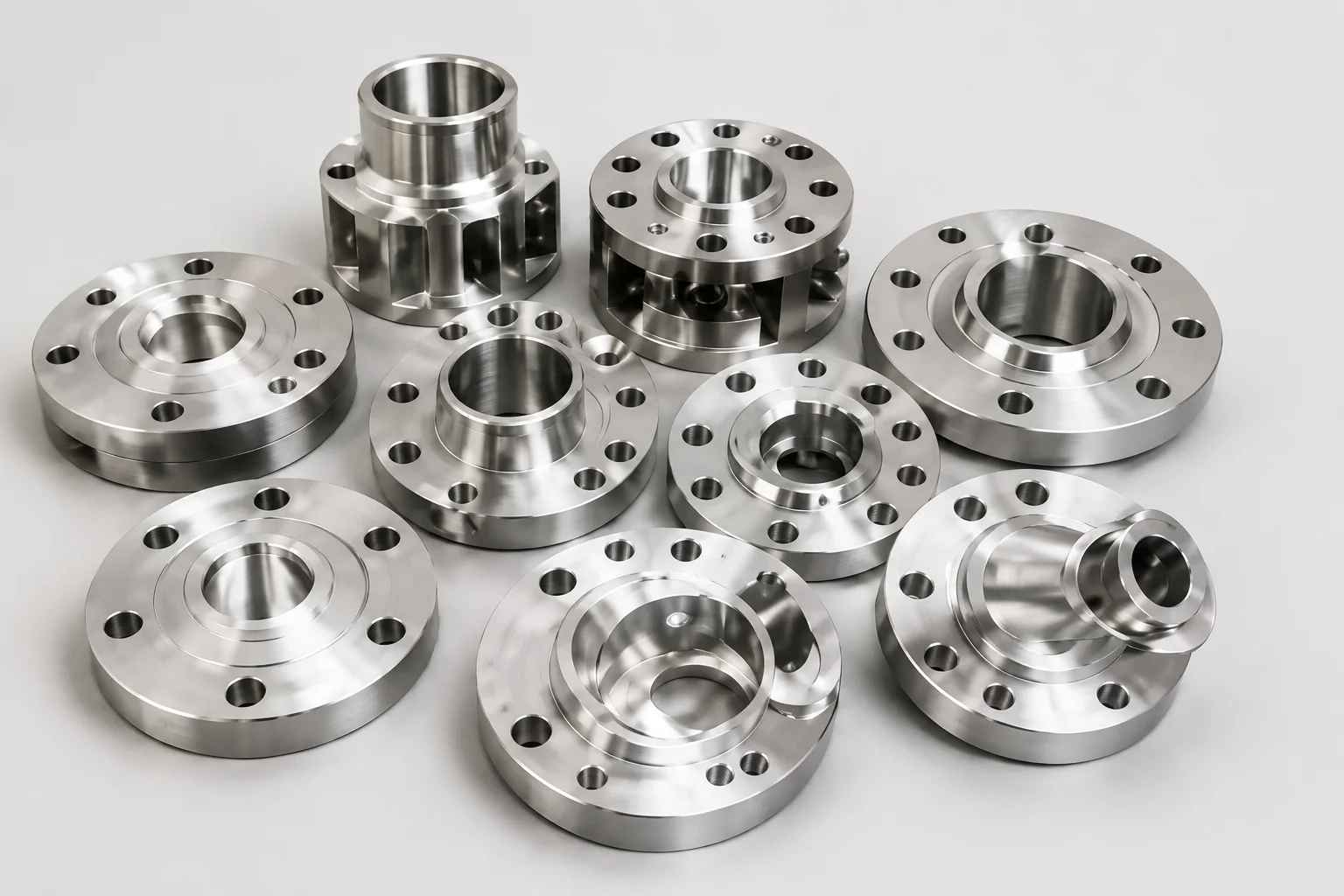
Flange overlay can protect a wetted bore and gasket seating area while retaining a carbon-steel body. Valve bodies may receive overlay in seats, cavities, and end connections. Pipe and fittings can be internally overlaid when solid-alloy construction is uneconomical.

Overlay transitions at weld ends need special attention because field welding can remelt or dilute the corrosion-resistant layer. The joint design should state whether the field weld is made to substrate, overlay, or a qualified transition. Any final PWHT must be compatible with both substrate and overlay.

FAQ

Is weld overlay the same as clad plate?

No. Weld overlay is deposited by welding. Clad plate or clad pipe can be produced by other bonding processes. Their interfaces and inspection methods differ.

Why are multiple overlay layers used?

The first layer is diluted by the substrate. Additional layers can achieve the specified final-surface chemistry and thickness.

Can PMI confirm overlay quality?

PMI can support alloy verification, but it may not evaluate all elements, dilution depth, bonding, cracks, or minimum thickness.

Should overlay be applied before or after PWHT?

The sequence depends on substrate, overlay alloy, procedure qualification, code, and project requirements. It must be agreed before production.

What is the most common procurement mistake?

Specifying only an alloy name without finished thickness, coverage map, dilution controls, machining, and acceptance tests.

Next Steps

Issue an overlay drawing and inspection plan with substrate, alloy, finished thickness, covered area, layer sequence, PWHT, machining, chemistry, ferrite, hardness, and NDE requirements.

Request a Quote

Related articles

Welding Carbon Steel to Stainless Steel in Piping Systems
Product Selection

Welding Carbon Steel to Stainless Steel in Piping Systems

A practical guide to dissimilar-metal welding between carbon steel and stainless steel pipe components.

Intergranular Corrosion and Cracking in Stainless Pipe Components
Quality Inspection & NDT

Intergranular Corrosion and Cracking in Stainless Pipe Components

Explains how grain-boundary degradation develops in stainless piping components and how projects can reduce the risk.

Heat Treatment for Pipe Fittings, Flanges, and Valves
Quality Inspection & NDT

Heat Treatment for Pipe Fittings, Flanges, and Valves

A practical guide to selecting, documenting, and inspecting heat treatment for industrial piping components.

Hebei Nuoan online sales support for pipe fittings quote

Online customer service

Connecting

Ask us anything—we'll reply as soon as we can.